
London’s been home for over 8 and a half years now. We’ve seen all the sights several times when friends and family have come to visit, so we know which have earned their reputation, and which are just an hour in a queue for a mediocre photo.
We’re not telling you to skip the big stuff. Most of it is worth seeing once. But we’ll tell you honestly when something’s overhyped, overpriced, or there’s a better alternative.
This is our honest weekend in London itinerary. The sights worth your time, the ones worth a quick walk-through on your way somewhere else, the biggest tourist traps in London and a few local secrets most visitors never find.


In this London weekend guide, we’ll share the full 2-day itinerary and then everything you need to know for your visit, including where to stay, how to get into London from the airports, how to get around the city and the best time to visit.
Have longer than 2 days in London? Check out our 4-day London itinerary instead.
Here’s where each stop sits across both days, useful for seeing how the route flows. Blue is day 1, and red is day 2.
Two days is enough to hit London’s main sights without rushing or spending all your time on public transport hopping from one place to the next.
It’s not enough to see everything; you never will. Nobody ever sees everything in London; it’s constantly changing. Even after 8 and a half years, we’re always discovering new places.
With this 2-day London itinerary, you’ll tick off all the main sights worth seeing and still have time for a few hidden gems and local secrets you won’t find in every other guide.
Your itinerary will be mapped out as a walk, as we’d recommend doing it this way. We’ve included the distances at various points. However, we’ve also shared the closest Tube stations if you don’t fancy walking it or can’t. Citymapper is the best app for getting around London.
One thing worth knowing before you start: a few sights on this London weekend guide, including the Tower of London, Tower Bridge and Shakespeare’s Globe, are covered by the London Pass. It’s only worth it if you’re planning to actually go inside rather than just see them from the outside. I’ll provide more information further down, but worth keeping in mind as you read.
Start your 2-day London itinerary in Marylebone, one of London’s more understated neighbourhoods. Georgian townhouses line quiet residential streets, and there’s a real village feel despite how central it is.
Marylebone High Street is the heart of it, with bakeries, delis, and small independent shops rather than chains. If you want to do some shopping on your weekend in London itinerary, this is the best place.
Tasty Corner is a cute cafe if you’re just looking for a drink. For a proper sit-down breakfast, head to Marylebone Corner, a cosy neighbourhood cafe serving classic British brunches with Turkish influences. This is quite popular, especially at the weekend, so arrive as early as possible (it opens at 8am).
Best Tube Station: Baker Street, Regent’s Park or Marylebone.


From Marylebone, walk down Oxford Street. Once considered the world’s biggest and busiest high street, with over 90 flagship stores at its peak. Worth walking through to tick it off, but don’t expect much from it anymore. A lot of the big names have gone, replaced by identical candy shops, and phone case and tatty souvenir stalls.
Best Tube Station: Oxford Circus. However, it can get extremely busy, so Bond Street, Marble Arch and Tottenham Court Road are also options.
Turn down Regent Street towards Piccadilly Circus, London’s first purpose-built shopping street. Regent Street has managed to keep some of its grandeur even as the shops around it changed, so it’s worth a walk down to see the historical buildings.
You’ll pass Hamleys on the way, the world’s oldest and largest toy shop, worth a quick look if you’ve got kids; easy to skip otherwise.

Piccadilly Circus is London’s answer to Times Square, known for its huge digital billboards. Companies pay close to £4 million a year for prime advertising space here, and around 100 million people pass through this junction every year. Walk through, but no need to stick around.
Best Tube Station: Piccadilly Circus.

From Piccadilly Circus, head to St James’s Park, one of the loveliest stops of the day. It’s one of London’s 8 royal parks, and after the crowds you’ve probably just walked through, you’ll be thankful for the calm.
This is also the best place to see Buckingham Palace if you’re not going inside. Skip the gates as they’re always crowded, and the view isn’t much better. Instead, stand on the Blue Bridge and you’ll see the palace framed by trees and water.
Best Tube Station: Westminster or St James’s Park.


We’ve purposefully left Hyde Park off this London weekend guide even though you’re not far from it. I don’t particularly like it; there aren’t any standout features, unlike with St James’s Park- just a lot of open grass. It’s also always busy. If you have extra time and want to visit another of London’s best parks, Regent’s Park is the better alternative, and one of my favourites.
A short walk from St James’s Park brings you to Westminster, home to 3 of London’s most recognisable landmarks, all within a few minutes of each other.
Westminster Abbey was founded in 960AD by Benedictine monks and has been the coronation church since 1066. Over 3,300 people are buried or commemorated here, including 30 British monarchs and other significant people in Britain’s history, including Sir Isaac Newton and Charles Dickens.
16 royal weddings have taken place here, with the most recent being the royal wedding of Prince William and Catherine Middleton on 29th April 2011.
You’ll need to buy a ticket to go inside, or you can view it from the outside for free. It’s also included in the London City Pass (more on that later).

Right next door is the Palace of Westminster, also known as the Houses of Parliament, the home of the UK government.
At the end of the building is the Gothic clock tower, Big Ben, though technically that’s the name of the giant bell inside. The tower is called the Elizabeth Tower and stands at 96 metres tall.

Our top tip: if you’re after the classic red telephone box photo with Big Ben behind it, head to Parliament Square. Be prepared to queue.
Best Tube Station: Westminster.

If you’re really interested in the British government and monarchy, book a Houses of Parliament and Westminster Abbey guided tour.
From Westminster, make your way to Trafalgar Square, about an 8-minute walk. Nelson’s Column stands at the centre, flanked by 4 lion statues and 2 fountains. It’s worth a few minutes to take it in, with the National Gallery in the background.
Events and rallies happen here regularly throughout the year; most are free to watch if the timing works out.
Best Tube Station: Charing Cross. Piccadilly Circus and Leicester Square are also nearby.

From Trafalgar Square, continue up towards Leicester Square on your way to Chinatown. This is London’s biggest tourist trap and the place I hate the most in the city, but you may as well tick it off as you’re heading this way anyway.
It’s always busy, and it’s full of casinos, novelty shops and overpriced chain restaurants aimed at tourists. The film sculptures dotted around are a bit of fun if you spot one, but don’t spend any real time here. And definitely don’t eat here; you’ll be so disappointed.
Best Tube Station: Leicester Square.


Chinatown is one of the best places in London for food; we eat here quite regularly and not just when we have visitors. We often come on a Sunday for dim sum.
It’s vibrant and hosts many events and activities throughout the year. Keep an eye out for the stone lions guarding the entrances, the decorative gates and the small art installations scattered throughout.
It’s always busy, but it’s somewhere we don’t actually mind the crowds. We’ll brave them for this food.


For a sit-down meal, some of our favourite restaurants are:
If you’d prefer to eat on the go, some great spots are:
For our complete guide to London Chinatown with more food recommendations, head to the post below.


Best Tube Stations: Piccadilly Circus and Leicester Square.
You’ve walked 4 miles to this point.
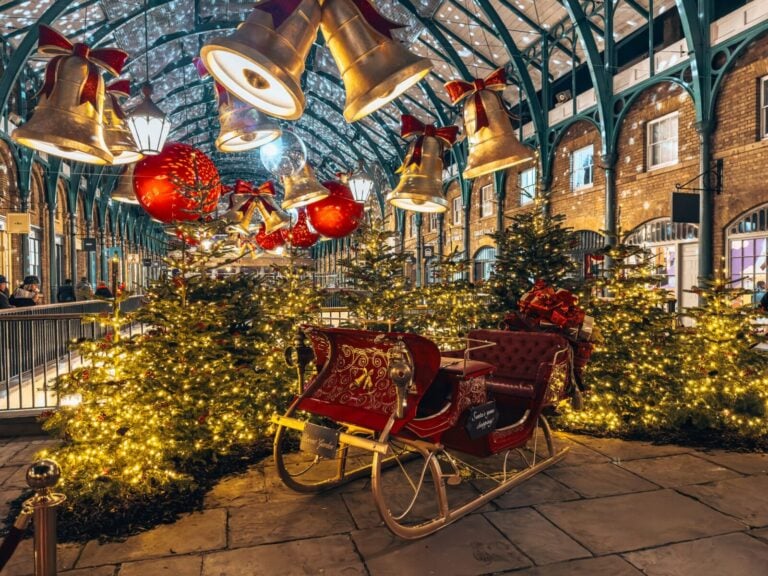
From Chinatown, it’s about a 7-minute walk to Covent Garden. This is one of my favourite touristy places in London, centred around the old market building and its cobbled, traffic-free piazza.
Covent Garden has had a thriving street performance culture since the 1600s with magicians, mimes, clowns and impressionists. You’ll no doubt see something while you’re here.
Our Top Tip: for the best view of the street performers, visit the 18th-century pub Punch & Judy. It sits right above the piazza and has an outside balcony overlooking the square below.


For a cheeky free viewpoint over the piazza and out to the London Eye, head to the bar Cicoria in the Royal Opera House. As long as you’re respectful, no one minds you enjoying the view for a couple of minutes. But it’s also a lovely spot for a glass of prosecco and people-watching over the piazza.

Visit Neal’s Yard while you’re here, one of London’s prettiest streets. People still try to pass this off as a hidden gem, but it hasn’t been a secret for about 10 years. It can get incredibly busy, whatever time you visit, but it’s still worth a quick stop on your London weekend trip. It’s a micro-village where the buildings are painted in bright, mismatched colours. You’ll find independent restaurants, bars, cafes, bakeries and remedy shops.

Best Tube Station: Covent Garden.
If you want some non-touristy things to do in London mixed in with the big sights, this next stop is exactly that.
Tucked just off St Martin’s Lane, Goodwin’s Court is a narrow, gas-lit Georgian alley. A corner of London that looks like it belongs in another century. Bow-fronted cottages line either side, and it inspired Knockturn Alley in Harry Potter, though it was too narrow to film in.


Especially if you only have 1 night in London, finish the day with a West End show. Most major theatres sit around Covent Garden, so you’re already well placed. Long-running productions like The Lion King, Wicked and Les Misérables have been staples for years, though it’s worth checking listings before committing to anything.
Our Top Tip: if you’re not fixed on a specific show, the TKTS booth in Leicester Square sells discounted tickets for performances in the coming days. For same-day seats, apps like TodayTix release digital rush tickets each morning.


Spend your evening in Soho, one of London’s liveliest areas for food and drink once the sun sets. Again, Soho is somewhere we’ll always brave the crowds for. You’ll find some of the city’s best food and drink spots down the tiny streets and narrow alleys. Some of our favourites are:


Best Tube Station: depends on your evening, but Covent Garden, Oxford Circus, Leicester Square and Piccadilly Circus sit within easy reach of the West End and Soho.
Total miles for day 1: approx. 5 miles, depending on where you go for the theatre and out in Soho.
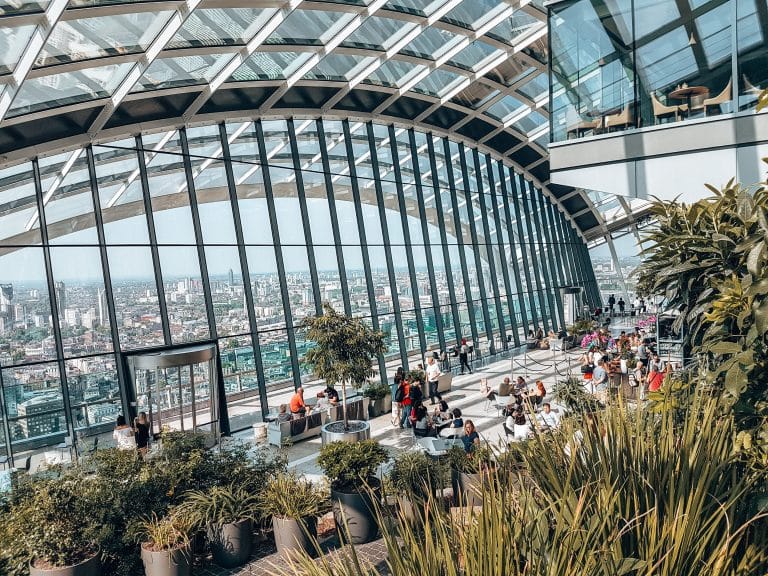
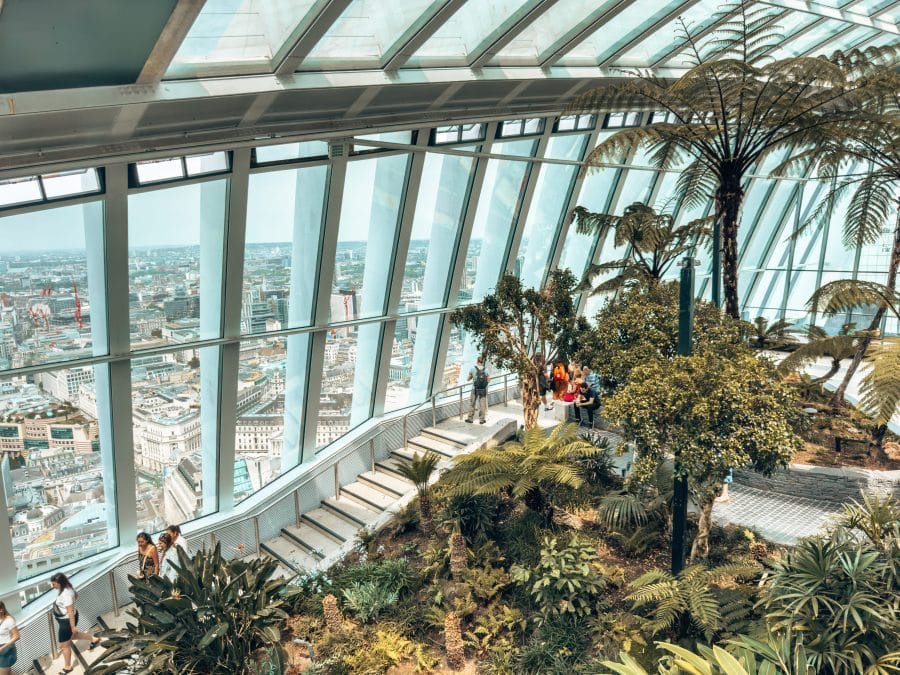
Start Day 2 of your weekend in London itinerary at the Sky Garden, one of London’s best free views over the city, at the top of 20 Fenchurch Street, better known as the Walkie Talkie Building.
It’s completely free to visit, though book a ticket online in advance rather than trying to walk in. Tickets are released every Monday (usually between 9am and 10am) for the next 3 weeks, and they get snapped up incredibly quickly. You can try walking in on the day, though you could queue for hours and you’re not guaranteed to get in.
The garden spans 3 floors, with tiered planting beneath a curved glass ceiling with views stretching far across London. It’s always busy, but it’s still one of our favourite viewpoints; the plants somehow keep the place peaceful despite the crowds.
Best Tube Station: Monument. Tower Hill, Tower Gateway, Aldgate, Bank and Mansion House are all within a 10-minute walk.
If you miss out on tickets, don’t panic; you have a few options. You can still visit the Sky Garden by booking a breakfast, dinner or experience that includes access. You’ll find a few options below, and these are much easier to get than standard tickets, especially for popular time slots.
We have a dedicated post about the Sky Garden with everything you need to know, so read that if you’d like more information.
Alternatively, Horizon 22 (which is actually taller than the Sky Garden and the Shard), The Lookout and the Garden at 120 all offer great views across London for free. For more information about these, check out our full guide to London’s viewpoints below.
A short walk from the Sky Garden brings you to St Dunstan in the East, one of the more unusual spots on this 2-day London itinerary.
The original church dates back to the 12th century and was badly damaged in the Great Fire of London in 1666. It was then rebuilt by Christopher Wren, only to be bombed and gutted again during the Blitz in 1941. Rather than rebuilding it, the City of London turned the ruins into a public garden, with ivy and climbing plants now growing up through the empty Gothic window frames.
It’s quiet (except weekday lunchtimes when it’s full of city workers), really atmospheric, and most tourists walk straight past with no idea it’s tucked behind the city’s buildings. We’ve written a full guide if you want more depth.

From St Dunstan in the East, continue to the Tower of London. A fortress founded by William the Conqueror in 1078 that’s served as a royal palace, a prison, and is now home to the Crown Jewels. This building has stood on the Thames for nearly 1000 years.
Keep an eye out for the resident ravens on the South Lawn. Legend has it the kingdom will fall if fewer than 6 are kept at the Tower, a superstition traced back to King Charles II. Today there are 7, one spare just in case.
A Yeoman Warder tour, included in your entry ticket, is worth joining too. The Beefeaters share centuries of stories about imprisonment, executions and intrigue.

Book tickets in advance, as this is one of London’s most popular sights and there’s often a huge queue to get them on arrival.
Right beside the Tower of London is Tower Bridge, completed in 1894 and one of London’s most recognisable landmarks. Walking across it at street level is free and takes a few minutes, but if you want to properly experience it, pay for entry into the towers.
Inside, high-level walkways connect the North and South Towers, 42 metres above the river. Glass floor panels are set into the walkway, so you can watch boats and traffic pass directly beneath your feet as you cross.
Best Tube Station: Tower Hill.

Want a guide to bring the history to life properly? A private 4-hour tour covers both the Tower of London and Tower Bridge, with admission included. A Blue Badge guide walks you through the Crown Jewels, the ravens’ legend, and across the glass floor.
The Tower of London and Tower Bridge are both included in the London Pass I mentioned earlier. If you’re planning on going inside multiple sights on this route, it can save you up to 50% compared to booking each one separately.
Cross Tower Bridge and head to Shad Thames, a stretch of cobbled streets running behind converted Victorian warehouses that once handled tea, spices and other goods shipped up the Thames. The overhead walkways connecting the buildings were originally used to move cargo between warehouses, and they’re still there today, giving the whole area a distinctive industrial feel unlike anywhere else on this route.
Our top tip: walk down Maggie Blake’s Cause for the view of Tower Bridge above.
For lunch, Browns Butlers Wharf sits right on the river in Shad Thames with an amazing view of Canary Wharf and Tower Bridge with the City behind it. The prices are very reasonable given the location. The other restaurants along this stretch are much pricier.


The other alternative for lunch is Borough Market, about a 20-minute walk from Shad Thames along the river. It’s considered London’s foodie market, tucked under railway arches that date back almost 1,000 years, making it London’s oldest food market. The setting itself is part of the appeal, and most of the food is good; however, it’s overpriced and always incredibly busy.

We don’t think it’s worth a dedicated visit on its own, though we understand it can feel like something you need to tick off. Since you walk past it anyway on this route, we’d suggest having lunch in Shad Thames, then wandering through Borough Market afterwards for a browse and maybe a dessert (and try a few of the food samples).
Best Tube Station: London Bridge.

In the afternoon, walk along the Queen’s Walk to South Bank, a lovely stretch along the River Thames.
Just after you pass Tower Bridge, you’ll have a great view of the City of London and HMS Belfast, a historic Royal Navy light cruiser that served in World War II and the Korean War. It’s now permanently moored here and is a floating museum.
If you’d like to go in, it’s included in the London City Pass along with several other attractions on this itinerary, so don’t buy a separate ticket.

Continue, and you’ll pass several of London’s bridges, Shakespeare’s Globe and St Paul’s Cathedral.
This whole stretch was mostly industrial wharves and warehouses until well into the 20th century. You can still spot traces of that history in some of the older buildings along the path.


There are plenty of pubs if you fancy stopping along the way. One of our favourites is Anchor Bankside, a pub that’s stood on this site in some form since the 1600s, with a large garden and a great view of St Paul’s across the river.


The London Eye was built for the millennium. It briefly held the title of tallest observation wheel in the world when it opened in 2000, standing 135 metres tall.
It’s worth seeing from Jubilee Gardens, but I wouldn’t bother going up. The view from the Sky Garden (or any of the other viewpoints) is much better and doesn’t cost anything.
That said, if you’d still like to go up, book tickets here in advance, as the queue is usually quite long. It’s also included in the London City Pass, so you won’t need to pay for it separately.
Best Tube Station: Waterloo.


Finish the day at Leake Street Tunnel, the city’s only dedicated legal graffiti spot and another of the best non-touristy things to do in London. Originally a Victorian railway tunnel, it’s now covered floor to ceiling in artwork that changes constantly as new pieces get painted over old ones.
It’s right by Waterloo Station too, so if you’re leaving London this evening, this is a convenient place to leave your bags earlier in the day, rather than carrying them around with you.
Today, you’ll have walked just under 4 miles.


If you’re not heading home straight away, or have more than 1 night in London, South Bank and Waterloo are worth staying local for dinner rather than trekking elsewhere.
Head to Lower Marsh, a small street most tourists never find, tucked just behind Waterloo Station. It’s got a lovely local feel, an eclectic mix of shops, a street food market by day, and outside dining that spills onto the pavement in the evening.
A few places worth eating around here:
There are also some great pubs and bars for a drink, including Circe’s Rooftop, The Fire Station, and Vaulty Towers.


All 6 of the areas below are handy for this London weekend itinerary. Some put you right on the route and in the centre of everything; others are within easy reach without a long journey each morning.
The West End is the beating heart of London’s theatre scene. Soho’s restaurants and bars spill onto the streets most evenings, and you’re within walking distance of Covent Garden and Chinatown. This puts you right at the centre of Day 1’s route, and just steps from wherever your evening ends.
Accommodation here comes at a price, as this is one of London’s most in-demand areas.
Bloomsbury has a quieter, more literary feel than the West End, home to the British Museum, Georgian squares, and cute independent bookshops. It’s walkable to Central London without the price tag or noise.
Fitzrovia sits just north of Oxford Street, historically London’s media and advertising district, with independent restaurants and cocktail bars tucked among converted Georgian townhouses.
King’s Cross has changed dramatically over the last decade. What was once a slightly rough transport hub is now home to Coal Drops Yard’s shops, restaurants and Granary Square. It’s a great spot to base yourself with direct connections across London and to Europe via the Eurostar.
South Bank is one of London’s liveliest riverside stretches with a mix of converted industrial buildings, street food stalls, independent theatres and some of the best views of the city across the water.
It’s busy most evenings, but in a good way. Buskers, food markets and people spill out of the bars along the riverfront.
It also puts you right on Day 2’s route with Borough Market, the Globe, Tate Modern and the river walk right on your doorstep.
The City of London is the financial district, with fantastic transport links and a great central location, right by the Sky Garden and Tower of London. Many bars and restaurants close on weekends since they’re aimed at office workers, so you may need to head elsewhere in the evening. Though, being quiet at the weekends usually means you’ll be able to snag a good deal on accommodation.
There are multiple airports to fly into for your weekend in London, all with direct links to the city. Avoid taxis; they’re expensive and take longer than public transport because of traffic.
From Heathrow, the Elizabeth Line into Central London costs £15.50, while the Piccadilly Line costs £5.90 and takes a bit longer. The Heathrow Express runs to Paddington for £26.
From Gatwick, the Gatwick Express runs to Victoria for around £20. Or, take the Southern train for around £15, which has more stops across Central London.
Stansted has the Stansted Express to Liverpool Street, or if you’re really on a budget, you can take the National Express coach.
From Luton, take the Luton DART to Luton Airport Parkway, then the train on to St Pancras. Again, if you’re on a budget, you can take the National Express.
We wouldn’t recommend the coaches unless you’re on a very tight budget. It can be quite confusing trying to find their airport location. They take much longer than the train, especially when driving through Central London. They make multiple stops, and if anything happens on the motorway and you’re stuck in traffic, you could miss your flight.
Walking is the best way to get around for this 2-day London itinerary. The main sights sit close together, and by the time you’ve found the right platform and navigated the crowds, you’d often have walked it faster anyway.
If you do take public transport, contactless caps at £8.90 a day for zones 1 and 2. Don’t buy a Travelcard as these cost significantly more than the cap.
Buses are a good option as they tend to be quieter than the Tube, and around Central London, they’ll pass some of the city’s main attractions along the way.
Santander Cycles, London’s bike hire scheme, costs £1.65 for a single 30-minute ride, or £3.50 for a day pass with unlimited 60-minute rides. E-bikes cost a little more: £3 standalone, or £1 extra per ride on a day pass.
Lime bikes are another option. Dockless e-bikes you unlock through an app, no docking station needed. They cost £1 to unlock, then around 27-30p per minute, which adds up fast on a longer ride. Better for short hops than covering real distance.
Our top tip: Citymapper is the easiest way to navigate London. It tells you which platform to head for, the best exit for where you’re going, and what your journey will cost.


Yes, for the big sights covered in this 2-day London itinerary. A weekend in London won’t show you everything the city has to offer. Nobody sees everything even if they live here. But it’s enough time to properly cover the major landmarks and a few local secrets without feeling rushed at every stop.
If you’re looking for weekend in London ideas beyond the obvious tourist spots, this itinerary mixes both: the sights worth seeing and a few finds most visitors never come across.
Yes if you’re actually planning to actually go inside some of the main sights on this itinerary including the Tower of London, Tower Bridge and Shakespeare’s Globe. If you’re happy seeing them from the outside, skip it. But if you want to go in, this pass gets you entry to several paid attractions at once, saving you up to 50% compared to booking each one on its own.
Choose 2 to 7 attractions from over 75 options, and the pass is valid for 30 days.
The Sky Garden and any of the main sights you want to visit. Queues for the most popular attractions can be hours long, and you don’t want to spend a chunk of your London weekend in queues. You’ll also need to book the London Explorer Pass ahead of your visit.
If you want to see a particular West End show, book that ahead of time to avoid disappointment.
2 days in London can be as expensive or cheap as you want. It’s impossible to give you an exact figure as everyone visits London in such different ways. London has a reputation for being incredibly expensive, and while it has rightfully earned that reputation in many ways, you can easily keep costs down.
If you want to actually go inside all the main sights, this will add up. And if you’re eating in high-end restaurants for every meal, having cocktails in swanky Soho bars, or enjoying a pint at every pub you walk past, you will spend a fortune.
However, London is also a great city to visit on a budget. Pretty much everything on this itinerary is free, especially if you see the sights from the outside. I’ve also included budget-friendly food options to keep costs down.
Spring and autumn for this London itinerary. Summers are getting hotter, and walking around London is not what you want to be doing when it’s 30°. It’s also very busy, and prices increase.
December is a great time to visit London because of the Christmas decorations and markets (it’s my favourite time of year). But you’d be better off spending your time around the markets rather than doing this itinerary.
January and February are the quietest and cheapest times, but they’re also the coldest, darkest and wettest.
Spring and autumn are when London is at its most beautiful. You’ve either got blossom or golden leaves lining the streets and parks, and the atmosphere is honestly amazing, with everyone either coming out of hibernation and enjoying the warmer weather, or heading out for crisp walks and cosy pubs.


London rain rarely lasts all day, so it’s often worth waiting it out in a cafe or cosy pub. If you do need an indoor backup, the Sky Garden and Borough Market are good shelter options, and there’s usually some kind of museum nearby.
Yes, coverage across Central London is reliable. If you’re coming from abroad, it’s worth sorting an eSIM before you travel rather than relying on airport and hotel WiFi for navigation apps like Citymapper.
Type G. Voltage runs at 230V, so most modern phone and laptop chargers will work fine with just an adapter, but check the label on anything before plugging it in.
Pounds Sterling. Exchange rates constantly change, so always check the current rate closer to your trip, but at the time of writing, 1 USD is 75p.
Yes, most restaurants add a service charge, and some are quite sneaky about it and will ask if you want to leave a tip as well, so always check your bill before paying. You can ask for the service charge to be removed, but if you’re not comfortable doing this, factor it in when eating and drinking out. It’s usually 10%-12.5%, although I’ve visited some higher-end restaurants where it’s 15%. Market stalls don’t tend to add it.
We hope this helps you plan a weekend in London with what’s worth seeing and skipping what isn’t. If you have a long weekend in London, read our 4-day London itinerary for a mix of tourist sights on days 1 and 2 and local neighbourhoods on days 3 and 4.
Drop us a comment if you’ve got any questions; we’re always happy to help 😊
Check out our other London guides below for more inspiration, and come find us on Instagram for real-time updates, behind-the-scenes chaos and lots more London guides.