
Knowing what to do in London in 4 days is hard when you want to see as much as possible, but still have time to enjoy the places you visit.
We’ve lived in London for over 8.5 years. We fell in love with the city, and this is the London we want to show you. We still find new areas to explore, and the city changes so fast that nobody keeps up. But that’s what makes it so exciting.
This 4-day London itinerary ticks off the tourist hotspots on day 1. Central London is compact, so you can easily see them in a day.
Days 2 to 4 take you to neighbourhoods where Londoners actually live and spend their time; the London we fell in love with. You’ll walk the cobbled streets of Wapping, see a replica of the old Execution Dock, and take in the city from one of London’s best free viewpoints. You’ll also walk the leafy canals of Little Venice and visit the trendiest areas, plus a few hidden gems and local secrets.


This works as a first-time-in-London itinerary as it shows you a great range of the city. If you’ve seen the main sights before, skip to day 2.
The guide starts with the 4-day London itinerary, then covers everything you need to know before visiting London, including where to stay, the best time to visit and how to get around.
Along the way, we’ll share food and drink recommendations, hidden gems, tips on avoiding the crowds and saving money.
If you only have 2 days in London, check out our weekend in London itinerary.
Here’s a quick snapshot of what to see in London in 4 days:
Your 4 days in London start with ticking off most of the tourist hotspots, so for the rest of your visit, you can focus on the neighbourhoods outside Zone 1 where the locals spend their time. This gives you a real insight into what London is actually like.
Today is mostly on foot as Central London is compact and very walkable. And jumping on and off transport will actually be slower.
You’ll start at Marble Arch and walk through Hyde Park to Buckingham Palace. In Hyde Park, walk down to the Serpentine and through the Hyde Park Rose Garden.
In my honest opinion, Hyde Park is nothing special; Regent’s Park is much more beautiful. But it’s a good place to start your itinerary, and I understand that most people want to see it, particularly on a first visit.

Leave the park and head down Constitution Hill to Buckingham Palace, home of the UK’s monarch. It’s worth a look if you’re interested in the monarchy. The Changing of the Guard ceremony is underwhelming, so don’t plan your day around it, although you can check the times and see if it’s on during your visit.
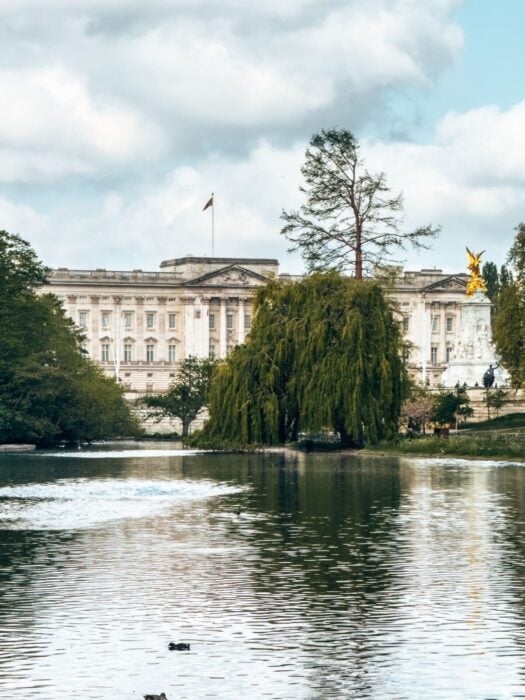
The gates of Buckingham Palace are always very busy, so stroll through St James’s Park, one of London’s oldest and most beautiful parks, and stand on The Blue Bridge. This is the best view of the palace framed by trees. Turn around, and you can see the London Eye. St James’s Park is also home to pelicans, so walk around the pond, and you may see them.

From here, make your way to Westminster Abbey, where every coronation since 1066 has taken place. Go inside if you’re interested in history. If not, the outside is enough.
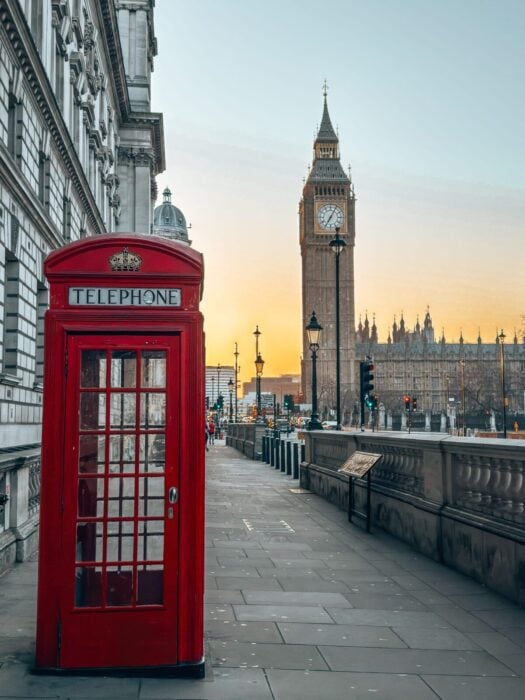
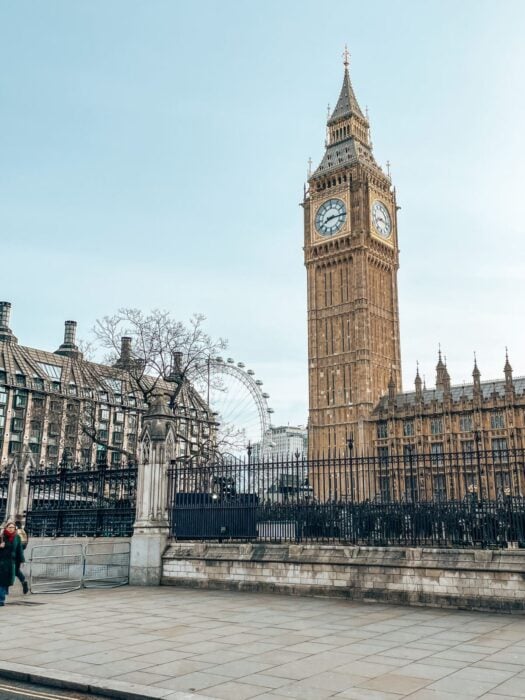
You’ll also see Big Ben, an iconic symbol of London. For the famous red telephone box photo, head to Parliament Square. You may have to queue, as everyone who visits London wants this photo.
Next up is Trafalgar Square. You can walk in 13 minutes or hop on buses 12, 24, 26, 87, 159 or 453 for 5 minutes. If you walk, you’ll pass Downing Street, the official residence of the UK Prime Minister and Great Scotland Yard, the original headquarters of the Metropolitan Police and the entrance to the Ministry of Magic.
Trafalgar Square is worth a stop. It commemorates Admiral Nelson’s victory at the Battle of Trafalgar in 1805, and his column stands in the middle. It’s also the epicentre of London’s festivities. Many events take place here throughout the year, including West End Live, Pride in London and Lunar New Year. It also tends to be the site of national rallies and protests.
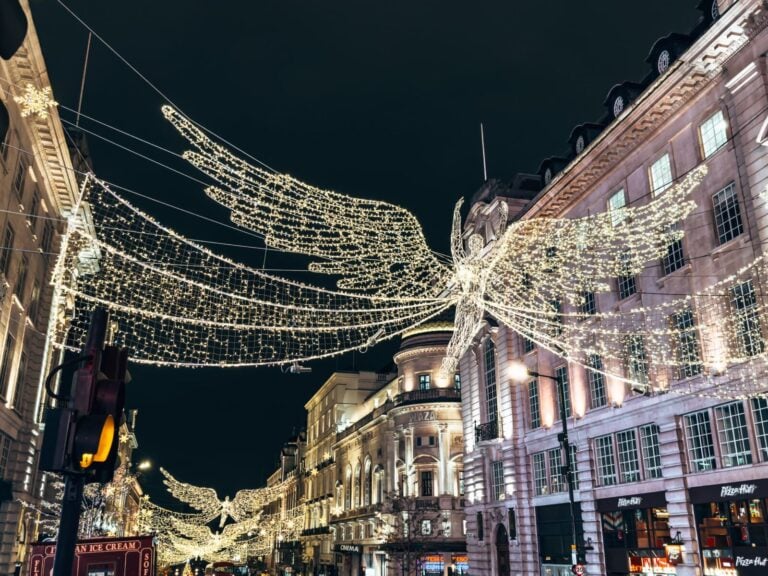
Next up is Piccadilly Circus, one of the most famous junctions on the planet with roughly 100 million people crossing it every year. It’s famous for its giant digital advert screens, which companies pay around £1 million for to be broadcast here. Honestly, I don’t get the hype, and it’s always busy, so don’t spend ages here. But you naturally walk through it, so you can tick it off.

The last stop before lunch is Leicester Square, a bustling square known for its entertainment venues. It’s completely overhyped and full of overpriced chain restaurants, novelty stores and casinos, so pass quickly through on your way to Chinatown, where you’ll eat.
Without stopping, this walk takes around 1.5 hours, so 2 to 2.5 hours depending on how long you stop for. Cycling should take around 45 minutes without stopping, and there are plenty of docking stations so you can avoid paying more than your £3.50 day pass (more on bikes in the getting around section).
Have lunch in Chinatown, one of London’s most colourful and thriving areas, packed with restaurants, bars, unique shops, supermarkets, health clinics, nail salons and bakeries. There’s something for every budget. High-end restaurants sit alongside simple grab-and-go eateries and all-you-can-eat buffets.


As well as the Cantonese eateries, you’ll find Vietnamese, Thai, Japanese, Korean, Malaysian, Singaporean, and so many more.
We’d recommend a sit-down meal so you can rest and really enjoy the atmosphere in Chinatown. One of our favourite restaurants is Dumplings Legend, where we always bring friends and family visiting. It’s known for its Xiao Long Bao (steamed soup dumplings).
This minimalist eatery is one of Chinatown’s most established and esteemed restaurants, serving around 8,000 dumplings a day!


They serve a wide range of yummy dumplings, sticking to traditional methods but also adding their own unique twist. You can even watch them being made in their open-plan, glass-walled kitchen.
If you’d prefer something on the go, check out Bun House for steamed buns. A custard bun for dessert is a must.
For our full guide to Chinatown with more restaurant recommendations, head to our blog post below.
If you’d rather taste your way around than pick one restaurant, this Soho and Chinatown food tour stops at 3 places, including a soft Chinese bun, and finishes in a pub with sticky toffee pudding and a drink.
Spend the afternoon around Covent Garden, first heading to Neal’s Yard, a 7-minute walk from Chinatown.
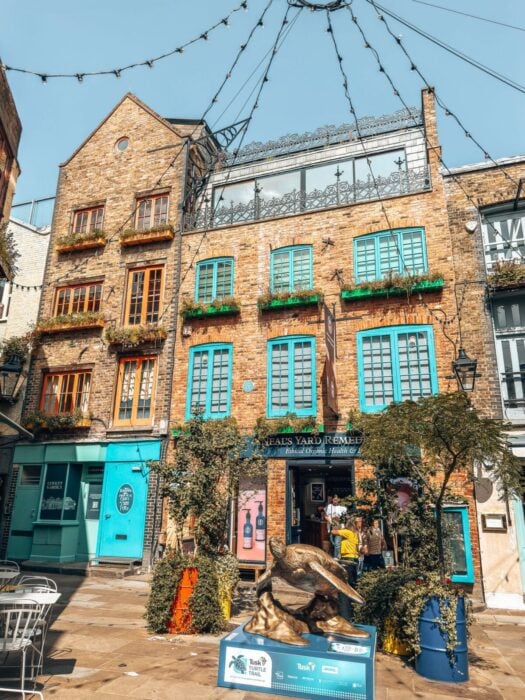
Tucked away from the hustle and bustle of Covent Garden is Neal’s Yard, one of London’s most colourful and Instagrammable places. It’s home to independent shops, cafes and restaurants.
It used to be one of London’s best-kept secrets, but it’s now very popular, so expect it to be busy, particularly at weekends.
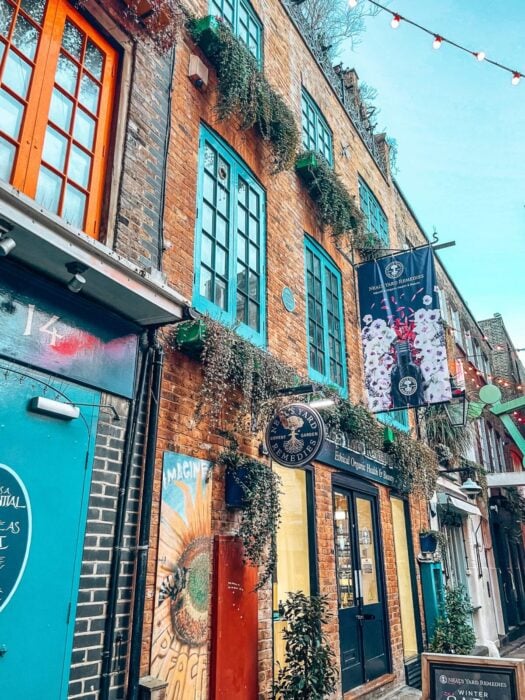
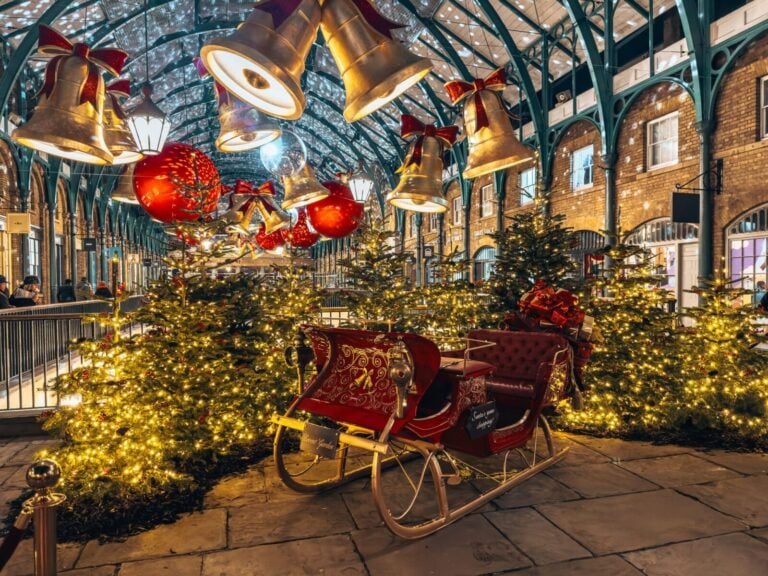
A 5-minute walk from Neal’s Yard is Covent Garden, a vibrant area known for its street performers, boutique shops, market stalls and restaurants. Have an amble around the beautiful market building, which once housed a fruit and vegetable market in the 17th century.

You’ll find one of the best free viewpoints in London at the Royal Opera House Piazza Restaurant. It’s also great for a drink with a view over the bustling piazza, the nearby historical buildings and the London Eye peeking above the roofs in the distance.

The best spot to see the street performers is the terrace of the Punch and Judy pub on the upper level of Covent Garden Market. It can get quite busy, but people usually only have 1 drink and leave, so you can get a seat quite quickly.
A 2-minute walk from Covent Garden is one of London’s prettiest streets, Goodwin’s Court.
This charming Georgian alley is lined with well-preserved bow-fronted cottages dating back to the 17th century. It also inspired Knockturn Alley in Harry Potter; however, it’s believed the alley was too narrow to film in.


For your first evening, head to Soho where you’ll find some of London’s best restaurants, bars and nightlife. The streets are full of restaurants from all over the world, so it can be quite overwhelming trying to decide where to eat.
Some of our favourites are:
While you’re in Soho, it’s a good time for a West End show. The Lion King will always be our favourite.
That concludes the first of your 4 days in London.
Want every place in this guide on your phone?
Every place in this itinerary is pinned in The Local's Map of London, sorted into viewpoints, hidden gems, tourist sights, museums, parks and walks, and markets. Free places are marked as free, and for tourist sights we say whether you can skip them and why.
📍 Get my London map →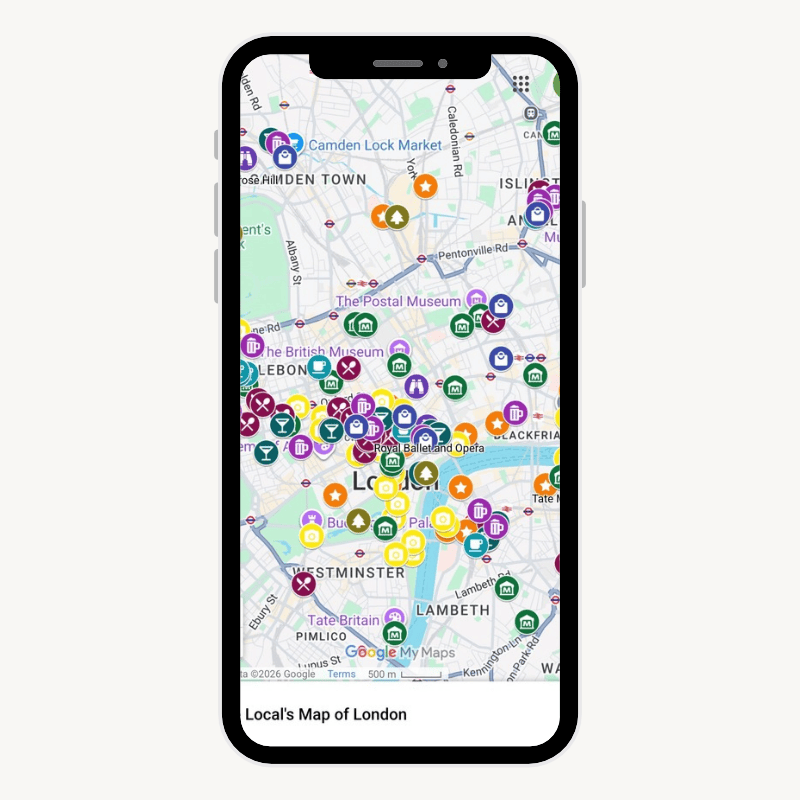
Day 2 of your 4-day London itinerary starts at Waterloo.
For another view of Big Ben, head to the gardens at St Thomas’ Hospital and onto the path that runs along the Thames. Underneath Westminster Bridge is a tunnel looking across to the Houses of Parliament.

From here, walk along South Bank and enjoy the views across the river to some of London’s most famous landmarks.
South Bank is a really fun area known for its arts and culture venues, great bars and restaurants and summer and winter events, markets and festivals.
As you walk along South Bank, you’ll pass the London Eye, the Tate Modern showcasing modern art from around the world and Shakespeare’s Globe, a reconstruction of the Globe Theatre, an Elizabethan playhouse built in 1599 where Shakespeare wrote his plays.


It’s about an hour’s walk to Borough Market from Westminster Bridge. Borough Market is London’s foodie market, in a cool location under the Victorian railway arches next to London Bridge. It’s very popular, and I personally think in recent years it’s become quite overrated. The food is very good; however, it’s overpriced (£10 for chocolate strawberries!) and very busy, especially at weekends.
It’s packed with stalls stacked with fresh produce, international delicacies, handmade chocolates, cheese and street food galore.
Most stalls hand out free samples, so you can try a few spots before deciding what you’d like.
If you’d prefer a sit-down meal, as you probably won’t get a seat at Borough Market, Padella serves delicious hand-rolled fresh pasta. It’s small, so there may be a queue, but food is served quickly, and usually you don’t have to wait long. You can also join a virtual queue if you know you won’t be long.

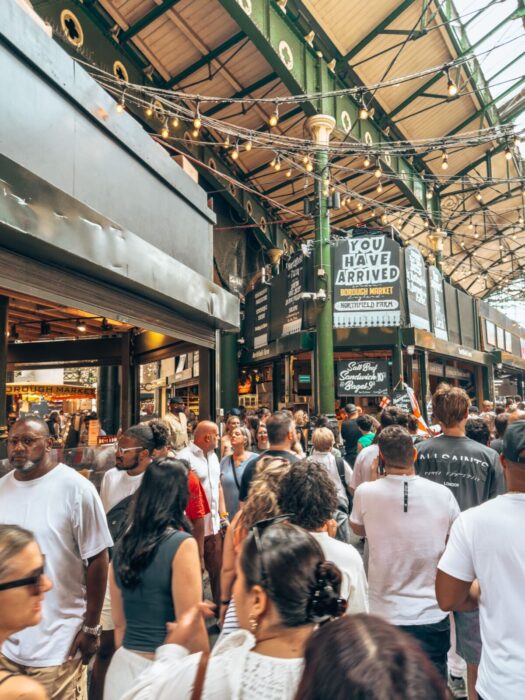
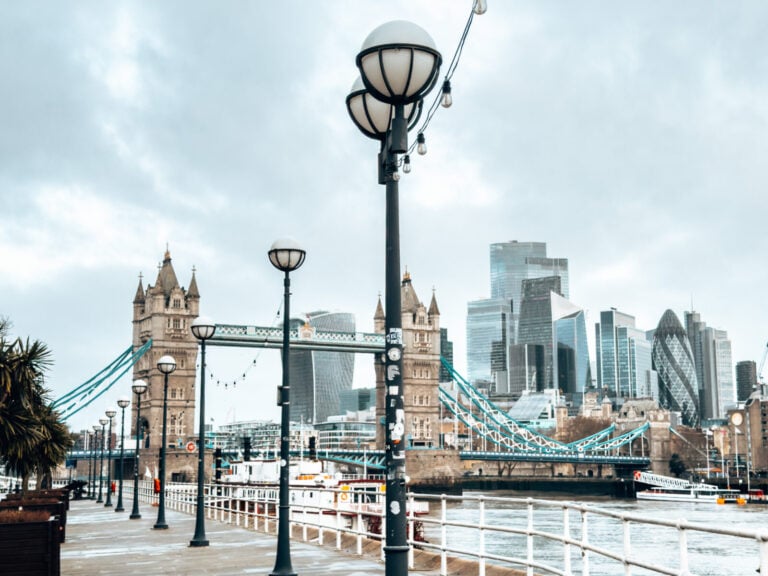
Your next stop is the Garden at 120, one of my favourite free London viewpoints. It’s a 15-minute walk from Borough Market over London Bridge, where you’ll see one of the best views of Tower Bridge, with Canary Wharf in the background.

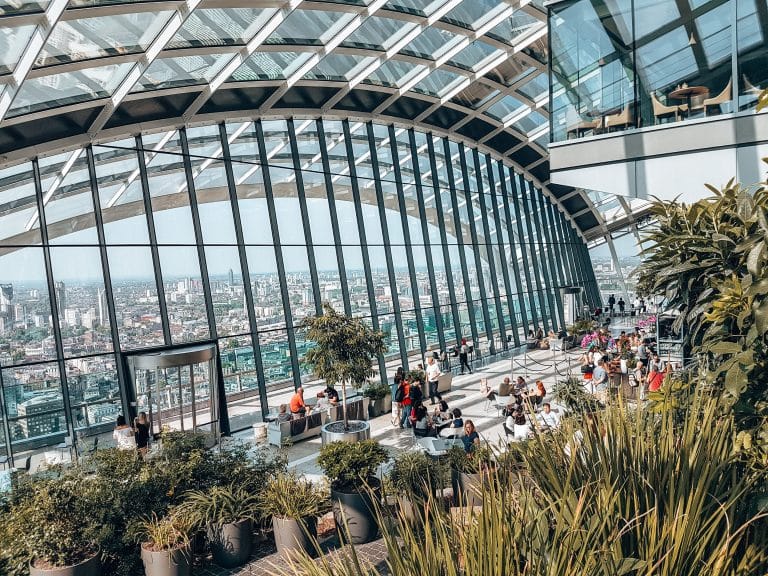
On the 15th floor of the Fen Court Building, the Garden at 120 is London’s largest public rooftop space, with a 360-degree view of London. It’s a peaceful oasis in the City of London, home to Italian wisteria trees, fruit trees and a lovely water feature.
There are several benches where you can soak up the views of London’s skyline. One of my favourite things about this viewpoint is that, as well as looking down over the city, there are huge glass skyscrapers towering above you.
You don’t need to book a ticket, but there may be a queue depending on the day.


From here, walk 5 minutes to the vine-covered, bombed-out walls of St Dunstan in the East, tucked away amongst the busy city streets, often going unnoticed.
St Dunstan in the East Church Gardens are a beautiful urban oasis where old beautifully fuses with new as the bombed-out walls sit sandwiched between glitzy skyscrapers and modern buildings.
For more information, we have a full guide to visiting St Dunstan in the East.

Walk 15 minutes to St Katharine Docks, past the Tower of London.
St Katharine Docks is Central London’s only marina. It was once a bustling commercial shipping and warehouse port, and is now home to upmarket restaurants, hotels and cosy pubs.
It’s also one of London’s best hidden gems. Despite its central location, it’s never too busy and provides a peaceful escape from the hustle and bustle of the city. Stroll around the marina and have a drink at the Dickens Inn, where you can admire the yachts from its outdoor terrace.


When you’ve finished at St Katharine Docks, walk through Wapping, one of our absolute favourite London neighbourhoods.
Wapping is a tiny area of East London steeped in centuries of history. You’ll find cobbled streets, old converted warehouses, historical pubs and gorgeous riverside homes.


Friends fans can see the church where Ross and Emily got married. It’s St John’s Church on Scandrett Street, opposite the Town of Ramsgate.
The Captain Kidd pub is named after William Kidd. He was a 17th-century pirate who was hanged at the nearby Execution Dock.
Our favourite pub in Wapping is the Prospect of Whitby. It dates back to the early 1500s. Smugglers, sailors, cut-throats and footpads once met here.


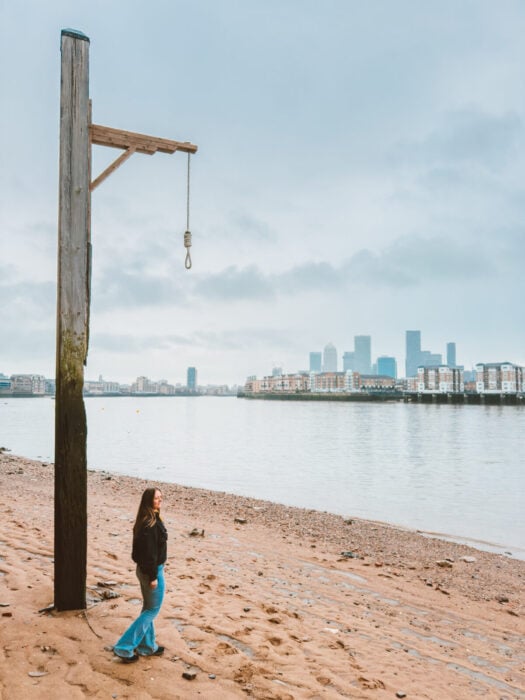
Next to the pub, stairs lead down to the Thames foreshore. A replica of Execution Dock stands there, similar to the one used for over 400 years.
It’s only accessible when the tide’s out, so if you want to guarantee you see it, check the tide times before you go.
For the full Wapping route and everything else to see there, head to our Wapping guide.
Your next stop is Canary Wharf, one of London’s most dynamic neighbourhoods full of bars, restaurants, green spaces and fun activities.
To reach Canary Wharf, you can either jump on bus D3 or walk half an hour from the Prospect of Whitby along the Thames Path and through Limehouse.
Our top tip: if you walk through Limehouse, stop for a drink at The Grapes. This historic riverside pub is owned by Sir Ian McKellen, and behind the bar you’ll see his staff from The Lord of the Rings!


Canary Wharf is a controversial one. Some people hate it and think it’s soulless. We absolutely love it. It’s unlike anywhere else in London and feels really futuristic.
It was once a busy financial district and a ghost town at weekends. Huge regeneration in recent years has changed that. New residential neighbourhoods have been built, and restaurants, bars, events and activities keep popping up all over the place.
Wood Wharf is a lovely waterside promenade with towering skyscrapers and green spaces. It’s one of the new neighbourhoods, full of cafes, bars and restaurants. If you have time when you arrive, take a stroll around it.

Some of our favourite things to do in Canary Wharf are:


There are several spots we’d recommend for dinner, so take your pick:


That concludes day 2 of your 4 days in London.
The Go City London Explorer Pass covers entry to 60+ London sights and tours, including Shakespeare’s Globe, Westminster Abbey, Buckingham Palace and Tower Bridge. With a pass, you can save up to 50% on entry.
On day 3 of your 4-day London itinerary, you’ll explore Hackney, one of London’s most creative, trendy and culturally diverse neighbourhoods.
Start at Victoria Park, our favourite park and local when we first moved to London. It opened in 1845 after thousands of East Londoners petitioned Queen Victoria for a massive green space to save them from the overcrowded slums of the Industrial Revolution.
Today, it’s known as the People’s Park because of its strong ties with the local community, with many events, markets and activities to get involved with.
Some areas to visit are: Victoria Park Lake (grab a coffee from the Pavilion Cafe and sit by the water), the colourful Chinese Pagoda accessed by an intricate iron bridge, the Old English Garden and the Burdett Coutts Drinking Fountain.
Our top tip: if you’re here on a Sunday, visit the Farmer’s market selling fresh local produce and delicious street food.


From Victoria Park, walk down Hertford Union Canal to the River Lee Navigation. You’ll walk up the river to Hackney Wick, where canalside cafes, bars, restaurants, and breweries line the banks.
Some great spots for lunch are:
If you’re here in the summer, the canal is a popular place for water activities, including kayaking and stand-up paddleboarding.


After lunch, head to Walthamstow, a vibrant East London neighbourhood oozing charm, diversity and a real community feel. It’s undergone major regeneration, with new businesses ranging from cosy cafes and craft breweries to independent boutiques, vintage shops and quirky restaurants in shipping containers.
You can walk in about an hour and a half through Queen Elizabeth Olympic Park and Hackney Marshes; however, we’d recommend public transport. Your first stop is God’s Own Junkyard, which takes around an hour to get to. Your trip back to central London is much quicker from Walthamstow; this area is a bit of a hole for public transport (which keeps it quieter than other areas). Your options are:
God’s Own Junkyard is one of the most unique places in London. It’s a kaleidoscope display of neon movie signs and backdrops, neon art made from found objects, retrieved and renewed waste and lights, fairground and circus lighting, disco balls, and so much more.

The artist behind God’s Own Junkyard, Chris Bracey, designed provocative, alluring signage for Soho, with 99% of brothels and strip clubs in London’s West End having signs created by Chris. Hollywood soon noticed him, and he was commissioned to create signs for films including Charlie and the Chocolate Factory starring Johnny Depp, Eyes Wide Shut with Tom Cruise and Batman with Jack Nicholson.
It’s one of the best free things to do in London, and we also have a dedicated guide to God’s Own Junkyard for everything you need to know. The museum is only open at weekends, so plan this day for a Friday or Saturday.

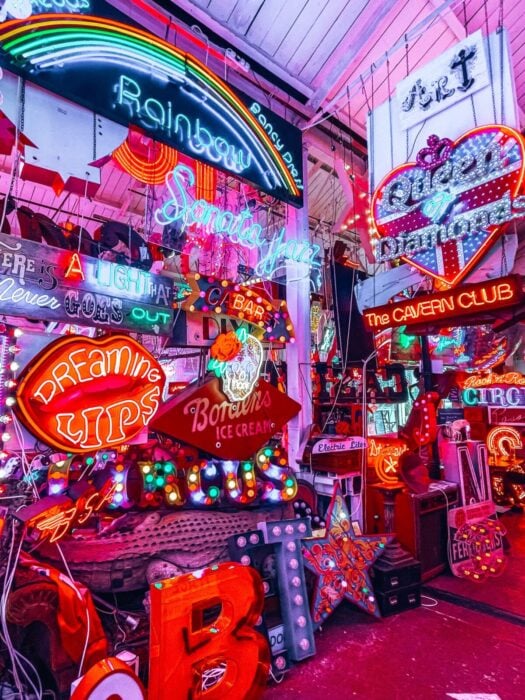
God’s Own Junkyard is on the Ravenswood Industrial Estate, home to the Ravenswood Collective, a community of independent businesses that spend the week manufacturing and creating and open their doors from Friday to Sunday to welcome everyone in.
Here, you’ll find breweries, taprooms, fitness studios, a cocktail bar, outdoor seating, street food, charity fundraisers and live music, so one of the best things to do in Walthamstow is spend an afternoon here.
5 minutes from God’s Own Junkyard is Walthamstow Village; a pedestrianised street lined with independent shops, cafes, restaurants and pubs with chairs and tables spilling out of the buildings. It honestly feels like you’ve stepped into a quaint European town, especially in the summer when everyone’s eating and drinking outside.
Walthamstow Village is the oldest part of Walthamstow, with well-preserved timber-frame buildings dating back to the 12th century.
Browse the shops full of knick-knacks, have a coffee at one of the cafes or soak up the sun in the huge colourful beer garden at The Village pub.

Walthamstow is a great place to stay, away from the craziness of the centre but within easy reach. You’ll get a real feel for what it’s like to live in London, too.
For dinner, some of the best restaurants are:
That concludes day 3 of your 4 days in London.


On the final day of your 4 days in London, you’ll visit some of the city’s best parks.
Start at Hampstead Heath, where, if it’s summer, you should definitely have a dip in the swimming ponds. There are single-sex ponds or a mixed pond, and you’ll need to book a ticket as places fill up quickly. The single-sex ponds are open year-round, so if you really want to, you can swim in the winter.

Then, head up to Parliament Hill for one of the best views of London. There are also lots of tree-lined paths and wide-open grassland if you want to properly explore the park.


After Hampstead Heath, head to Primrose Hill for another great view of the London skyline. You can either jump on the C11 bus for 20 minutes or walk for half an hour via Chalcot Square to see one of the prettiest streets in London.


From Primrose Hill, walk down the hill and cross the road to Regent’s Park. It changes with the seasons and is insanely beautiful in them all.
In summer, visit Queen Mary’s Rose Gardens to see London’s largest rose collection (around 12,000), the Japanese Garden with a waterfall, lake and beautiful flowers and the Avenue Gardens, which are particularly striking during spring when they’re full of blossom or autumn when the trees are vibrant reds and oranges.


From Regent’s Park (Avenue Gardens), walk 40 minutes along Regent’s Canal to Laville Restaurant for lunch.
Laville Restaurant is a gorgeous Italian restaurant literally over Regent’s Canal with views of Little Venice and the houseboats floating underneath you. The pasta and pizza are also delicious. Book a table as, unsurprisingly, it’s popular.
After lunch, continue along Regent’s Canal. This is Little Venice, and it’s one of the most beautiful places in London for a walk. Particularly during autumn, when the canal is framed by vibrant oranges and golds from the trees.

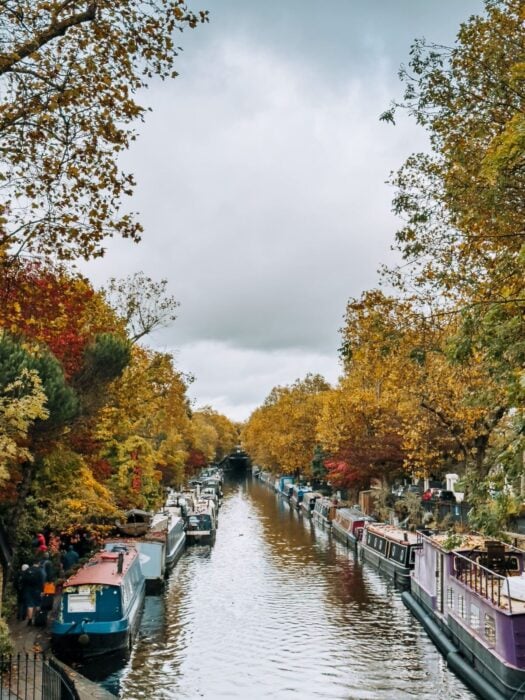
If you’d rather see Little Venice from the water, this canal boat ride goes from Camden Lock to Little Venice and back, past Regent’s Park and London Zoo. You’ll go through a working lock and a short canal tunnel, and hear live commentary on the canal’s history.
When you reach the fork, turn left towards Paddington, cross the canal and just before you reach Paddington Station, stop for a drink on the roof of the colourful barge, Darcie and May Green.


Paddington Station ends your 4 days in London. However, you can visit a couple more of London’s prettiest streets round here if you fancy it.
Conduit Mews and Bathurst Mews are a few minutes’ walk from Paddington Station. The quaint cobbled streets are lined with charming historical houses which were once stables and coach houses with living quarters above for staff and servants. Today, they’re some of London’s most expensive and sought-after properties.

That’s your 4-day London itinerary, finished. Here’s everything you need to know before you visit.
Yes. London in 4 days gives you 1 day for the main tourist sights and 3 days in the neighbourhoods where Londoners live and actually spend their time. You won’t see everything, but nobody does. We’ve lived here for over 8.5 years and still haven’t seen nearly everything. As a first-time-in-London itinerary, it covers the highlights on day 1. If you’ve been before, skip to day 2.
Start this 4-day London itinerary on a Wednesday if you can. Day 3 then falls on a Friday, and God’s Own Junkyard is only open from Friday to Sunday. If you start on a Thursday, day 3 is a Saturday, which also works. Weekdays are quieter than weekends, so a Wednesday start keeps days 1 and 2 off the busiest days, which also keeps Borough Market during the week.
Supperclub Tube only runs on certain nights, so check its website before you book.
There’s no best time to visit London, as every season brings something different. In winter, you have Christmas markets and decorations. Spring brings the blossom. Summer brings beer gardens, festivals and rooftop drinks, and autumn brings golden foliage and Halloween decorations.
You have a better chance of good weather between May and September. July and August bring the crowds, so avoid them if you can. And if the last couple of summers are anything to go by, it’s incredibly hot.
If you’re here for Christmas, visit in mid-November. The lights are up, the markets are open, and it’s (slightly) quieter than December.


Stay in the West End, South Bank or the City for the most central base. Shoreditch or Walthamstow for a more local feel. This itinerary is spread out, so you’ll use public transport wherever you stay. These areas all work well as a base for this 4-day London itinerary.


London in 4 days can mostly be done on foot. In Central London, you’re often quicker walking than taking transport.
Our top tip: use a contactless card. Don’t buy a travel card, as they’re the most expensive way to travel. Once you hit the daily cap, the rest of your travel that day is free. The cap is £8.90 for Zones 1 and 2 and £10.50 for Zones 1 to 3, the furthest this itinerary goes.
A single Tube journey in Zone 1 costs £3.00 to £3.10. Yes, it’s outrageously expensive; another good reason to walk. A bus costs £1.85, and you won’t pay again if you tap on another bus within an hour. Citymapper is a great app for navigating.
Santander Cycles are another option. A day pass costs £3.50 and covers unlimited rides of up to 60 minutes. Docking stations are everywhere, so you can easily dock a bike and take another. Longer rides and e-bikes cost extra, so check the current charges on the TfL site.
You can also use Lime e-scooters and e-bikes.


No, you don’t need one. You can use an Oyster card or a contactless card, and capping works the same. An Oyster card costs £10.50 to buy, and that fee is non-refundable. Some people prefer one because they feel safer not getting their phone or bank card out. As a Londoner, I don’t have an Oyster card; I always use contactless on my phone.
Only if you want to go inside 3 or more paid sights. If you’re happy seeing most sights from outside, as this itinerary does, skip it.
Westminster Abbey is included in the GoCity London Explorer Pass. If you’re buying the pass for other tourist sights, you won’t need to pay for the Abbey separately. Check the list of included attractions before you buy, as it changes.
Our Local’s Map of London tells you if a tourist sight isn’t worth visiting and why, so you know which ones are worth paying for.
Take the train or the Tube. All of London’s airports have direct links to the city.
Avoid taxis. They’re so expensive and slower than public transport because of the traffic. The only airport where a taxi can be worth it is Stansted, if you’re staying in East London, such as Walthamstow.
If you’re visiting London from outside the UK, an eSIM saves you roaming charges from your home provider. Install it before you fly, and it works when you land. Use code SQUEAK for a discount on an Airalo eSIM.
Yes, and it’s honestly getting out of hand. You will find the odd bar or restaurant that doesn’t; however, most do. It’s added to the bill and is usually between 10% and 15%. You will often be asked if you want to leave a tip on top, and people can sometimes get caught out. So check the bill before paying.
The service charge is always discretionary, so you can ask for it to be removed.
The UK uses the pound. At the time of writing, 1 USD is 0.75 GBP. Currencies fluctuate quickly, so check the current rate before you go. Contactless cards are accepted everywhere, and London is increasingly becoming cashless, so don’t bring lots of cash.
The UK uses plug type G with three rectangular pins. Bring an adapter if your plugs are different. This universal adapter fits plugs from any country, so 1 adapter covers London and your next trip. It has 2 USB-C and 2 USB-A ports, so your phone, tablet and headphones can all charge from 1 socket.
That’s your 4 days in London. If you have any questions or want to say hi, please leave a comment below.
As we live in London, we’re continually adding to our London guides, so browse our posts below or head to our London travel page for more.
Finally, make sure you’re following us on Instagram for more London guides, behind-the-scenes chaos, and to stay up to date with us in real time.