Most people think of Whistler as a ski town. We did too, until we lived here and realised there’s actually so much more to do in summer.
We met in Whistler, so this guide isn’t written from a few days’ holiday. It’s from actually living here and experiencing it like a local. We discovered places most visitors never hear about, like the abandoned train cars slowly being reclaimed by forest, or the crumbling remains of Parkhurst Ghost Town, on the edge of Green Lake, away from the must-dos everyone knows and the crowds that come with them. And we’ll share these in this guide.
Whistler in summer has hundreds of kilometres of hiking trails, glacier-fed lakes for swimming and paddleboarding, and black bears you’ll genuinely spot around the village if you know when and where to look.
Whether you’re road-tripping between Vancouver and Calgary or here on a working holiday visa, this guide covers everything: 16 things to do, our top restaurant picks, where to stay for every budget, how to get here and how to get around once you’re here.

Peak 2 Peak Gondola rides connect Whistler and Blackcomb Mountains, Whistler Mountain Bike Park has more than 80km of downhill trails, and five lakes around the village offer everything from quiet paddleboarding to cliff jumping.
Add ziplining across the valley, a bear population of around 60, and tons of dining, and you’ve got 16 fantastic things to do in Whistler, covered below, including a few most visitors never know about.
Not everything here costs money either. Whistler has a bit of a reputation for being quite expensive, which can be true if you’re booking a lot of activities and eating out all the time. However, there are many free things to do in Whistler, including the lakes, most hiking trails, Parkhurst Ghost Town, disc golf, bear viewing around the Village and everything along the Sea to Sky Highway except the gondola.
While the bulk of this guide is all about the top things to do in Whistler in summer, we’re going to start with the journey between Vancouver and Whistler, as that’s an experience in itself and shouldn’t be driven in one go.
Driving between Whistler and Vancouver (whichever way you go) should take about 1.5 hours if you don’t stop. However, the scenery is unreal, and there are a few places to stop off along the way.
The Sea to Sky Highway is a very fitting name, as you’ll quickly see. On one side you’ve got Howe Sound, a spectacular deep blue fjord with boats scattered across it. On the other, the Coast Mountains stack up one behind another.
Your first stop along the Sea to Sky Highway, just outside Squamish, is the Stawamus Chief, one of the largest granite monoliths in North America. There are three peaks, all accessible from the main track, so if you’re short on time, you don’t need to do all three.
The first peak is closest to the car park, a 4km round trip, and it’s also where you get the best views over Howe Sound. The second peak is the largest, the third the highest, and walking between the two takes you over North Gully, with a view back across Squamish and the highway you’ve just driven.

If you’d rather skip the climb, the Sea to Sky Gondola gets you up to pretty much the same views over Howe Sound without the legwork. There’s a lodge at the top with food and refreshments, a network of short walking trails, a suspension bridge, and a couple of viewing platforms.
Booking online in advance means one less thing to sort out once you’re there, especially useful if you’re planning to arrive early to beat the car park filling up in summer and avoid a long queue.
Brandywine Falls is about 17km south of Whistler and an easy one to fit in. A 10-minute walk from the car park to a 70-metre waterfall, so it doesn’t take up much time.
If you want to spend longer here, Brandywine Falls Provincial Park has its own hiking and mountain biking trails, plus a picnic spot at the viewpoint overlooking the falls.

10km north of Brandywine Falls is Callaghan Valley, which hosted several events at the 2010 Winter Olympics and is a proper outdoor adventure playground.
Hiking trails, waterfalls, a handful of viewpoints, and if you fancy something different, quad biking is one of the best ways to see the whole valley in one go.
Hiking to Train Wreck is one of the most unique things to do in Whistler and one that most people visiting drive straight past.
In 1956, a freight train derailed nearby, and rather than completely removing the carriages, they were moved away from the tracks and left in the forest. Decades on, they’re covered in graffiti and slowly disappearing into the trees. It’s now a favourite among graffiti artists and photographers.
Park at the Interpretive Forest Car Park off Cheakamus Lake Road, or walk from Cheakamus, turn right onto Jane Lakes Road and follow the signs to the Sea to Sky Trailhead. Either way, you reach it by suspension bridge, surrounded by its own hiking and biking trails.

With the drive up the Sea to Sky Highway behind you, this is what you actually came for. We’ve broken it down into 11 of the best activities in Whistler in summer, some you’ll already know about and a few you probably won’t. Use the contents above to skip straight to whatever you’re after if needed.
First things first, get yourself up the mountains!
The Peak 2 Peak Gondola holds the Guinness World Record for the longest and highest lift in the world, connecting Whistler and Blackcomb mountains.

It’s a 4.4km, 11-minute ride, crossing between the two mountains with the town, lakes, glaciers and rainforest laid out below you.
Our Top Tip: wait for one of the black gondolas; they’ve got glass bottoms.
While you’re up here, grab lunch on either mountain; both have decks looking straight out over the valley. Your Peak 2 Peak pass also gets you access to over 50km of hiking trails on both mountains; more on that below.

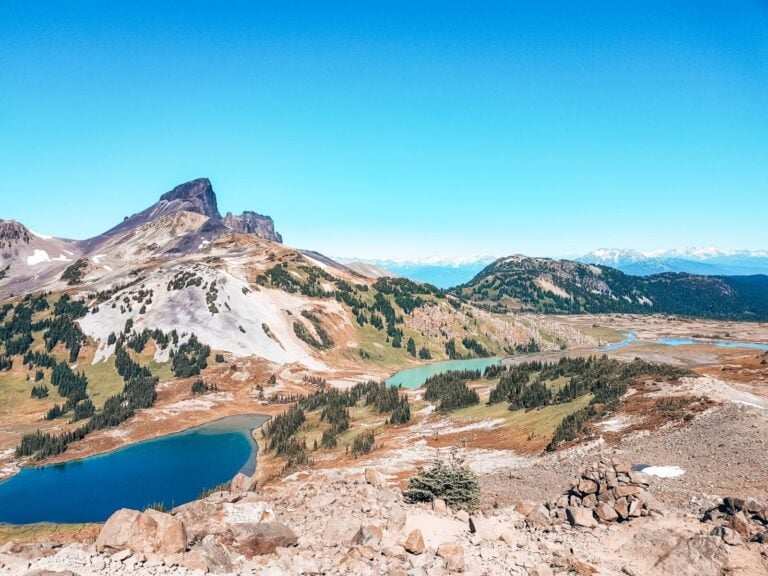
Take Peak Chair too if you can; it runs right up to the peak of Whistler Mountain, where you can see Black Tusk in Garibaldi Provincial Park in the distance.
Whistler’s lakes are one of the best parts of summer here. A couple are an easy walk from the Village; the rest are worth hiring a bike for. All of the lakes are free to visit; you’ll only pay if you rent kit like a paddleboard.
The closest to the Village, about a 30-minute walk through the forest, and the warmest to swim in. A grassy beach and pontoons make it perfect for a lazy afternoon.
Because of its accessibility from town and temperature, Lost Lake is the most popular lake around Whistler, so it can get very busy. Definitely still worth a trip, just giving you a heads up.
Our Top Tip: rent a bike and do a lap of the Lost Lake Loop cycle trail before cooling off with a dip.

Bigger than Lost Lake and popular for watersports. Lakeside and Wayside Park are walkable from the Village; Rainbow Park is on the far side and needs a car or bike.
We’d actually recommend Rainbow Park specifically. The view back across the lake to Whistler and Blackcomb Mountains is incredible and one of the best views in Whistler. Rent a paddleboard at Wayside, paddle over, spend an hour, paddle back.

The largest and deepest of Whistler’s lakes, which also makes it the coldest. It’s glacier-fed, so people don’t really swim here beyond cliff jumping, but it’s popular for canoeing, kayaking and paddleboarding.
Green Lake also doubles as the floatplane “airport” between Vancouver and Whistler. Grab lunch at Nicklaus North Golf Course and watch them land.

Tucked away in Creekside, about 4km from Whistler Village and reachable by bus or bike. There’s no big grassy area, just a small dock, and it’s much quieter than the other lakes since it’s too cold to comfortably swim in. It’s a lovely spot for paddleboarding.
On the other side of Creekside to Nita Lake, Alpha Lake has a large grassy area, a sandy beach, volleyball and tennis courts and a dock. It’s a favourite local spot, given how close it is to the residential neighbourhoods nearby.
We spent most of our summer here on bikes, and honestly, it’s the best way to actually get around.
The Whistler Valley Trail runs for over 40km, is car-free, and connects the Village to the lakes, viewpoints and neighbourhoods around it.

There are tons of bike shops in the village, and some hotels also rent them out, sometimes at a discount for guests.
Our Top Tip: keep an eye out for bears, especially if you’re out early in the morning. Watch this video on tips to keep safe and be prepared, as Whistler is bear country, and it’s quite common to see them (I was late to work one morning, as there was a bear at the end of my driveway and I couldn’t leave the house!).


This one should be obvious, but you can’t come to Whistler in summer and not go hiking!
There are hundreds of trails for hikers of all abilities, ranging from short woodland strolls around lakes to multi-day treks in the backcountry.
All of the hikes are free; the only cost is your Peak 2 Peak pass if you’re starting from Whistler Mountain. You can hike up Blackcomb Mountain Ascent Trails and access the hiking trails up there for free. You’ll either need to hike down again or purchase a download or lift access ticket from Guest Services before you head up the mountain.
Your Peak 2 Peak Pass gets you onto the hiking trails on both mountains. Grab a trail map and head up the Whistler Village Gondola (look down and see if you can see any bears on the mountain).
For something fairly easy, the green paths are a mellow stroll. Peak Express Traverse is a good one, taking a thrilling ride up Peak Chair to “The Top of the World” first. The Harmony Lake Loop is a step up, an intermediate 2km through alpine forest.
Our favourite though is the High Note Trail. Start at the top of Whistler Mountain, turn right and wrap around the back side.
Our Top Tip: stop for a photo at the Inukshuk before you get too far in.
From up here you get the clearest view of Black Tusk on the skyline, and the trail eventually brings you round to a viewpoint over Cheakamus Lake in Garibaldi Provincial Park. It’s rated intermediate; it’s 9.5km, and it takes around 4 hours.


An hour north of Whistler is Joffre Lakes; three striking blue lakes with a glacier sitting behind them.
A round trip is roughly 9.5km so allow for about 3-4 hours depending on your pace.
Joffre Lakes is one of the most popular hikes around Whistler, so a day pass is now required to visit. These are free, and you can get them online. We’d still recommend arriving as early as possible so you can start the hike without the crowds.
Our Top Tip: continue hiking up to Matier Glacier if you’ve got the time. It’s the only spot where you can see all three lakes lined up at once. It’s not part of the official trail, and it’s quite steep, so make sure you’re comfortable doing this and take care.

About 20 minutes south of Whistler is Garibaldi Provincial Park, where there’s no end of hiking trails.
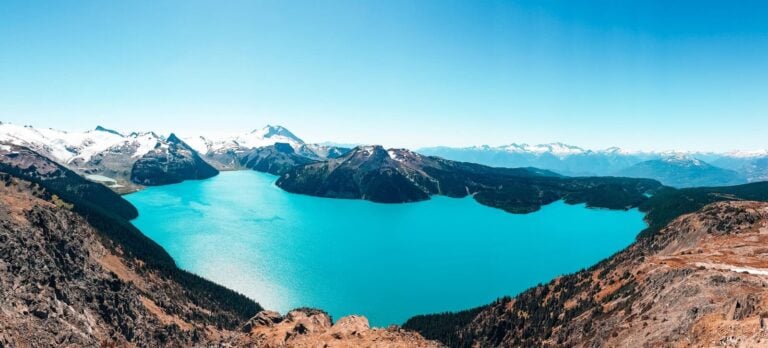
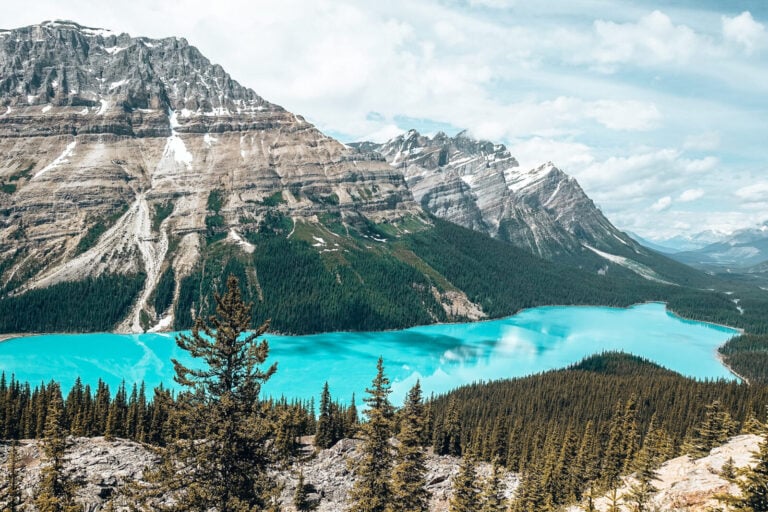
Garibaldi Lake itself is one of the most striking spots in British Columbia; turquoise water with glaciers and snow-capped peaks reflected in it.
Black Tusk, the peak you can see from Whistler, is also here. Follow the same route as Garibaldi Lake, then turn off left about 6km in, continue through alpine terrain and scramble over loose shale to the top.
You’ll feel well and truly on top of the world!

Panorama Ridge is hands down the most incredible hike in the park. Instead of turning off for Black Tusk, keep going through the meadow, passing streams and fields of wildflowers. The last stretch is a bit of a killer, but the view at the top is so worth it. This is my favourite view in Whistler, hands down!

Our Top Tip: do it over 2 days. Hike to Garibaldi Lake, pitch your tent and have lunch. After lunch, hike up to Black Tusk, then Panorama Ridge the following morning.
We have a full guide on hiking in Garibaldi Provincial Park, so read that for everything you need to know.
One of our favourite hikes in Whistler in summer, as the mountain scenery is just unreal.
Rainbow Lake is actually the source of Whistler’s drinking water, so unfortunately, there’s no swimming or camping. But it’s one of the clearest lakes and the views of Wedgemount and Blackcomb Mountains from the far side of the lake are worth the hike alone.

The trail is mostly through forests and across creek bridges, which is a nice shelter from the sun on a hot day.

It’s a 16km round trip; allow for about six hours, which should give you a bit of time at the lake.
Paddling the River of Golden Dreams is a proper local Whistler tradition at least a couple of times each summer.
It runs from Alta Lake through the Whistler Wetlands and finishes at Green Lake, and it’s so peaceful.
If you have your own gear, you can do it on your own. If not, you can book a self-guided or guided tour and hire everything you need.
This is one of the most relaxing and unique summer activities in Whistler and a different way to see some of its incredible scenery.
Our Top Tip: water levels shift a fair bit through the season, so check conditions before you go. There may be sections where you need to get out and carry your gear if it’s been dry for a while.
With more than 80km of bike trails from beginner greens to expert double blacks, mountain biking in Whistler in summer is something you absolutely should try.
Whistler Mountain Bike Park draws riders from around the world, with almost 5000 vertical feet of adrenaline-pumping downhill trails.

Our Tip Tip: take your bike up Peak Chair for the view over Black Tusk and Coast Mountains. You’ll find the chairlift itself thrilling as you cross an ancient glacier and a 100-foot vertical cliff near the top.
If downhill biking sounds a bit much, a guided eBike tour takes you along the Whistler Valley Trail, past the lakes and forest, with stops along the way, at a much calmer pace.
One of the most exciting and fun things to do in Whistler in summer, and a great way to see the incredible scenery on Whistler and Blackcomb Mountains, is ziplining!
The guides are very knowledgeable, and as you fly through the forest, you’ll also pick up a fair bit about Whistler’s ecology and wildlife.
There are tours for complete beginners right through to ones built for groups chasing more of a thrill.
For those really looking to get the adrenaline pumping, you want the big one. The Sasquatch is the longest zipline in Canada and the US, spanning over 2km between Whistler and Blackcomb Mountains (basically underneath the Peak 2 Peak Gondola).
Around 60 black bears live in the mountains here, so you’ve got a genuinely good chance of spotting bears in Whistler.
For your best chance, join a guided tour around the mountains in a 4×4. An experienced guide will also point out feeding sites, daybeds and dens, not just the bears themselves.
Another place you may spot bears is on Whistler Mountain as you’re in the Whistler Village Gondola. Between the bike trails and the mountain restaurants is a large area where people don’t tend to go, so often you’ll see bears there.
Our Top Tip: the Whistler Golf Club before 8am is another good shout, and this is completely free.

This one’s a bit of a local secret, so it’s a good place to go to escape the crowds.
Parkhurst was a logging town on the edge of Green Lake. Mrs Parkhurst sold the land to the Barr Brothers Logging Company in 1926, and around 70 loggers lived and worked here at its peak.
The industry slowed through the 1950s, and the town was abandoned by 1966. It’s been slowly reclaimed by the forest ever since.

The walk to Parkhurst is about 6km with 577 feet of elevation gain, so nothing too challenging. You’ll pass Green Lake and the surrounding mountains on the loop back.
Like the hikes above, this one’s completely free, and you don’t need the mountain pass.

Good for an afternoon with friends, and a decent way to see more of the forest, since that course is played through the woods rather than an open park.
Also completely free; bring your own discs or borrow a set if a friend has one.
After a big day outdoors, or even if you haven’t had one, a great way to end the day is in the Scandinave Spa.
It’s an authentic Scandinavian-style spa, silent throughout, so it’s all about actually switching off. Alternate between the hot, cold and relaxation areas and give yourself a few hours to get through the full cycle a few times.

There are so many places to eat in Whistler, from casual pub food and grab-and-go bites to proper fine dining. Here are some of our favourites from when we lived there.
Helen’s favourite! Relaxed atmosphere with Canadian comfort food. You can either have big main meals or share small plates. It’s great for date night or an evening with friends.
Our Top Tip: request a table by the window for views over Whistler Village.
Andy’s favourite, mostly for the wings. It’s an upscale chain, but the food’s genuinely good and the prices are very reasonable. The patio looks straight out onto the Village Stroll, and it’s one of the last places in the village to capture the sun each day.
Our Top Tip: Happy Hour runs twice a day with around 30 discounted food and drink items.
We’re slightly biased about this one as we technically met here. Andy worked in the restaurant, and I worked at The Listel Hotel where it’s based. Nevertheless, it’s earned its place here.
It’s an elegant French-style bistro where you can either enjoy the full Bearfoot Bistro experience: a 5-course tasting and wine pairing menu, sabre a bottle of champagne in the underground cellar and head to the world’s coldest vodka tasting room. Or, if that’s a bit excessive, the bar serves small plates and delicious cocktails.
If you fancy trying more of Whistler’s finest restaurants, this dinner tour takes you through four of the Village’s award-winning restaurants, one course at each, starting here at Bearfoot Bistro’s 15,000-bottle wine cellar, where you’ll sabre your own bottle of Champagne before moving on to the next course.

Our Top Tip: try the nitro ice cream. It’s made in front of you at your table, and it’s quite a special way to finish your evening.
A must if you fancy pizza. It’s rustic, casual and serves delicious Neapolitan-style pizza and fresh pasta.
This is a great budget option as most of the meals are around $11 and the portions are huge. There’s loads to choose from: burgers, tacos, salads, poutine and tons more.
This was our first ‘proper date night’ so it’ll always mean something to us. A cosy, high-end French fusion, with an open kitchen behind the bar. It’s in Creekside, so you’ll need to drive, cycle or take the bus.
Our Top Tip: pair dinner here with drinks at Lakeside Lounge in Nita Lake Lodge next door for a lovely date night.
July to September if you want to make the most of everything in this guide. June works for most of the Whistler summer activities, but hiking will be limited while the snow’s still clearing.
School holidays are Whistler’s busiest and most expensive. If you’re flexible, September is the best time to visit. July and August are also very hot, with an increased risk of wildfires. October and November tend to be very wet, and Whistler and Blackcomb Mountains, along with the Peak 2 Peak, close.
Summer in Whistler is actually quite similar to the UK. Also, the village is in a rainforest, so it will rain from time to time. Often, though, temperatures are around 21-25 degrees Celsius, and it’s fairly dry and sunny.
If you want to cover most of the things in this guide, you’ll need at least 4 days, with a couple of them set aside for the full-day hikes.
It’s quite common on longer Canada road trips to have 2-3 days in Whistler, which is great to get a taste of the village and mountains. Spend a day up Whistler and Blackcomb Mountains, one day in Garibaldi Provincial Park or Joffre Lakes and one for the Village and surrounding lakes.
We were lucky enough to live here for a year, and there was always something fun to do, new mountains to hike and new places to explore.
Vancouver’s the closest airport, about an hour and a half south. Driving is the easiest and quickest option, especially if Whistler’s part of a longer trip.
If you’re not driving, you can book a transfer from Vancouver, or if you want to arrive in style, take a floatplane and land right on Green Lake.
Depends on your budget and the atmosphere you’d like
Whistler Village puts you right in the middle of everything: bars, restaurants, shops and gondolas all on your doorstep. You can park the car on arrival and not touch it again until you leave. It’s also the busiest, and nightlife runs late, so if you’re not up for that, pay attention to where in the Village you’re actually staying.
Our top recommendations for hotels in Whistler Village are:

Upper Village is quieter and feels more secluded, but is only a 10-minute walk to the Village.
Whistler Creekside is your choice if you’d rather be away from the tourist crowd. There are still plenty of places to eat and drink, as many locals live here and hotels tend to be cheaper.
Whistler Village is pedestrianised; everything’s within easy walking distance. For Lost Lake, there’s a free shuttle running all summer from either Olympic Plaza or the Gondola Transit Exchange if you don’t fancy the walk.
Getting to Creekside is easiest by bus; parking is limited anyway. Take the 10 or 20 south, about 10 minutes, $2.75 each way, either exact change or contactless. If you’re here for a while, you can buy passes which work out cheaper.
Honestly though, the best way to get around Whistler is by bike along the Whistler Valley Trail. Whistler Village to Creekside takes about 30 minutes, and you’ll pass a few of the lakes on the way.
You’ll need a Summer Sightseeing Pass to access Whistler and Blackcomb Mountains.
Plenty. The lakes are the easiest win, Lost Lake and Alta Lake especially as they both have grassy areas and gentle water for swimming.
The Whistler Valley Trail is flat, paved and easy cycling for families. A lot of the hiking trails around the Village and up Whistler and Blackcomb Mountains are definitely suitable for families with little ones. Joffre Lakes and Garibaldi Provincial Park are better suited for teenagers at a minimum (unless you’re comfortable hiking with a baby in a baby carrier). There are also zipline courses perfectly suited for families with children over the age of 6.
UK passport holders need an Electronic Travel Authorisation (ETA) to enter Canada. It’s $7 and valid for 5 years (or when the passport expires, whichever comes first). For any other passports, check your entry regulations online before you travel.
Canadian dollars. At the time of writing, 1 CAD is roughly 0.72 USD. Always worth checking the current rate closer to your trip, as it changes.
Types A and B, the same as the US, with two flat parallel pins plus a grounding pin. You’ll likely need a voltage converter too, as Canada runs on 120V, while the UK and Europe run between 220V and 240V. Ask Helen how she knows this one; she caused a power cut plugging in her GHDs without one, and they never worked again!
Whistler in summer is genuinely amazing. We’ll definitely be back one day; we still have friends there who never left as they loved it so much. Most people only ever picture the ski runs and snow, but between the lakes, the hikes, the bears and everything else, summer might just be the better half of the year to visit.
Whatever you end up doing, we hope this guide helps you find your way to a few of the spots most visitors never think to look for, not just the ones everyone photographs.
If you have any questions or just want to say hi, then drop us a comment, and we’ll get back to you.
If Whistler is part of a larger Canada road trip, make sure you check out some of our other Canada guides below.
And come find us on Instagram for real-time updates, behind-the-scenes chaos and more travel tips and inspiration 😊


4 Comments
Is it ethical to promote bear viewing as a tourist activity when it can disrupt the natural behavior of these animals and potentially put them at risk?
Hiya, bear viewing in Whistler is ethical when done as a tour run by experienced guides who are trained to show you their natural habitat safely and without damaging it. Bears are very common around Whistler so learning about them on a group tour rather than looking for one on your own will be safer for you and the bears.
Whistler is so pretty in summer. I drove up there from Vancouver last year and had the best time. Gorgeous views!
I’m glad you had the best time, it’s a gorgeous place!!