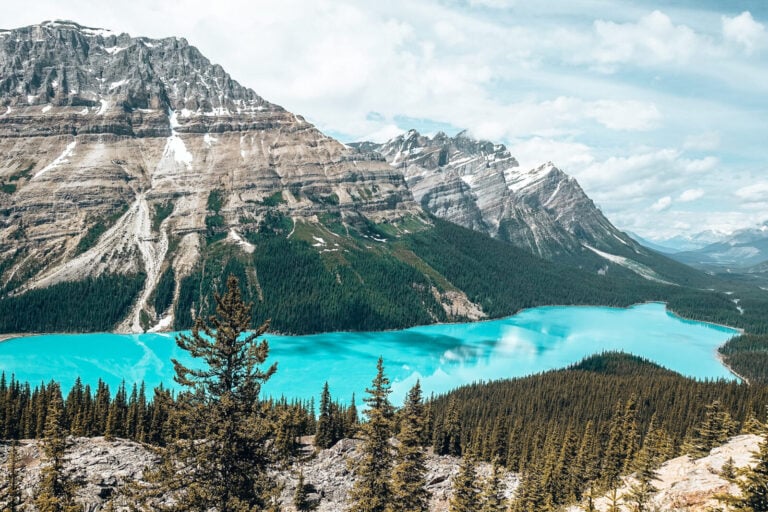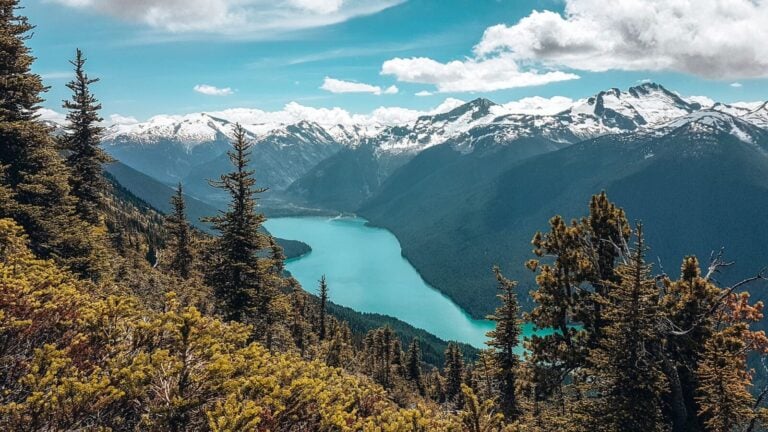
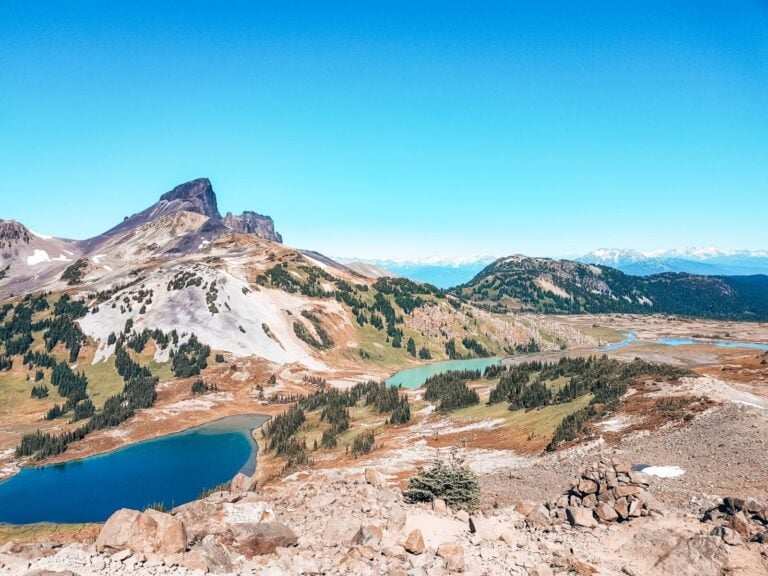
When you picture Canada, you probably picture vast national parks, piercing blue lakes, and epic mountain ranges. While Nova Scotia doesn’t have the colossal peaks of the Rocky Mountains that inspire awe and adventure, it invokes peace and contemplation, and its landscapes are just as captivating.
Nova Scotia is shaped by the sea. Rugged coastlines, quaint, colourful fishing villages, forested headlands and lighthouses perched on rocky shores. Inland, huge, tranquil lakes sit among tall, silent trees. Where the coast feels wild and windswept, inland feels peaceful and timeless.
The province is deeply tied to its history and the diverse cultures that have shaped it. The Mi’kmaq (pronounced Mee-gmah) have called it home for over 11,000 years, and their culture, language, and connection to the land are still evident today. French Acadian, Gaelic, Celtic and African Nova Scotian communities also play a huge role through festivals, music, food and traditions.
For nature lovers, Nova Scotia is a paradise. Walk rocky coastal paths, on the ocean floor at the site of the world’s highest tides, or along quiet woodland trails. Spot black bears, moose, turtles and whales, and watch the sunset over the Atlantic. It’s the kind of place that makes you slow down, breathe deeply and feel wonderfully small in the best way.

In this guide, we’ll share the very best things to do in Nova Scotia, plus everything you need to plan your trip, including how to get around, where to stay, the best time to visit Nova Scotia, and more.

Nova Scotia’s a big province, and these 14 spots are quite spread out. The map below shows where each is located, so you can decide whether to focus on the south, Cape Breton or visit both if you have the time.
The best things to do in Nova Scotia span colourful fishing villages like Peggy’s Cove and Lunenburg, the world’s highest tides in the Bay of Fundy, hiking trails along the Cabot Trail, and Kejimkujik National Park’s lakes and Mi’kmaq history. Add fresh lobster wherever you go, in every form imaginable, and you’ve got one of Canada’s most underrated road trips.
Here’s our full list of 14, based on our own 7-day road trip.

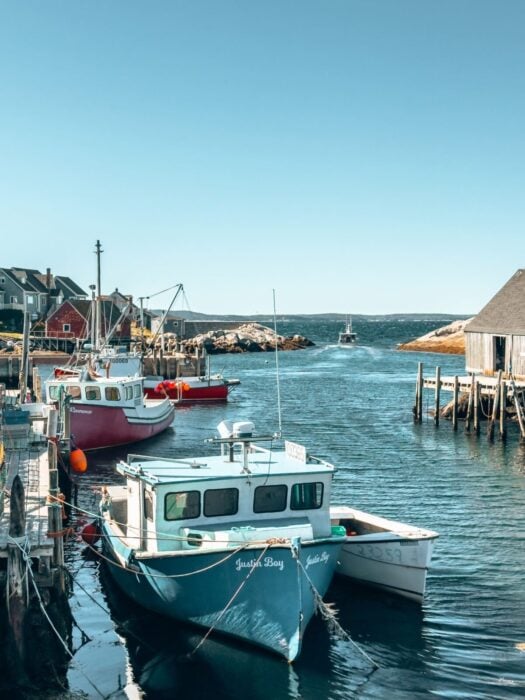
One of the best places to visit in Nova Scotia is Peggy’s Cove, a quaint, working fishing village about 45 minutes south of Halifax. Colourful wooden houses cling to the rocky shoreline, home to families who’ve lived here for generations. Fishing boats bob in the harbour, and lobster cages scatter the streets.
Peggy’s Cove is home to Nova Scotia’s most photographed landmark, Peggy’s Cove Lighthouse (also known as Peggy’s Point Lighthouse). Built in 1915, it sits atop massive granite rocks looking out across the Atlantic, guarding the village.

Our top tip: avoid the dark grey boulders. Sudden, large waves often hit them, and they’re slippery.
In town, many houses have become gift shops and art galleries, perfect for souvenirs. We bought a lovely painting of a lobster from Hags on the Hill, a collective of local artists who take turns running the shop. You may even meet the artist who created your piece.
Don’t leave Peggy’s Cove without grabbing a lobster roll from Tom’s Lobster Shack. We tried both the classic and truffle; both were absolutely delicious, but the truffle just won for us.


Driving the Cabot Trail is one of the most iconic things to do in Nova Scotia. This 298km scenic highway around northern Cape Breton Island offers sweeping coastal views, mountains, pretty villages, and some of the best hiking in Nova Scotia.


Although you can do the drive in a day, we’d recommend 2 days to fully enjoy the hikes, lakes, forests, and viewpoints. We only had a day and wished we’d had another. Driving counter-clockwise is usually best for ocean-side stops and the best views.
The trail starts at Baddeck, a village on Bras d’Or Lake. Stroll the town, grab a coffee from Bean There Cafe, shop for souvenirs in the boutiques, or just enjoy the lake views. Baddeck is also home to the Alexander Graham Bell National Historic Site, showcasing his inventions.


Your next stop is Ingonish, about an hour on. Just before it, pull over at Pathend Brook Lookout, one of the best Cabot Trail viewpoints for sweeping views of lush forest meeting the Atlantic.
For lunch, stop at Main Street Restaurant (you’ll drive past it) for fresh local lobster. The bruschetta and tacos are two of the best ways we ate lobster on this trip.


One of the most unique places in Nova Scotia is Ingonish Beach, where you’ll find a freshwater lake sitting right next to the ocean, separated only by a strip of sand. Sit by the lake listening to the ocean, or walk the 2.5km loop walk around its shore.

From the beach, you’ll see Middle Head on your left, a peninsula jutting into the ocean and one of the best hiking trails in Nova Scotia (more on that later). Other nearby hiking trails are Franey and Warren Head, which we’d have done if we had another day.

Along the Cabot Trail, stop as often as you like. Fishing villages line the coast, there’s always a viewpoint to stop at, and for some of Nova Scotia’s best whale-watching, head to Pleasant Bay.
On the western side of Cape Breton, the Skyline Trail is one of the best hikes in Nova Scotia, and a must-do, ideally for sunset (more on that next).
The Cabot Trail ends at Chéticamp, a small French-Acadian fishing village dating back to the 1700s.
2 days minimum, though you could easily stretch it to 4 and travel at a slower pace. We only had 1 day, and we ended up rushing towards the end and missing a few places we’d wanted to see. With 2 or more days, you get time to actually stop and explore somewhere properly, rather than just pulling over for a photo at each viewpoint and driving straight on. There are also lots of hiking trails along the Cabot Trail, and we’d have loved the time to do more of them.
The Skyline Trail is one of the best hiking trails in Nova Scotia and the most iconic along the Cabot Trail.
The path leads to a cliff overlooking the rugged coastline, where the headland juts dramatically out over the Gulf of St. Lawrence, with views of the Cabot Trail winding around the mountains below and the ocean stretching to the horizon.

Along the way, you’ll walk through lush forests of red spruce, Nova Scotia’s official tree, along with fir, maple and birch.
We hiked it at sunset, when the sky lights up in fiery orange and gold, and the trail is much quieter. We arrived and watched the colours build over the cliffs; it was one of the most peaceful moments of the whole trip.


You have 2 hiking options: a 9.5km loop or a 6.5km out-and-back. We’d recommend the loop, as most people stick to the shorter route, so it’s quieter, and you can see more of the scenery. We planned to do the loop, but after a full day driving the Cabot Trail, we were short on time and had to run to make sunset. We actually missed it by about a minute, but the colours were still spectacular.
The trail is well-maintained and pretty much flat, with only a gentle uphill on the return.
Our top tip: stay on the boardwalk; it protects fragile plants and foliage. Rangers patrol the area and fine anyone who doesn’t stick to the path. We even saw a ranger chasing someone who’d wandered off, so they do enforce it. Moose also roam freely, so give them plenty of space if you spot one.
Whether you visit in autumn to see the golden foliage or any other season for the coastline, the Skyline Trail is one of the best places to visit in Nova Scotia.
You’ll need to book a timed parking slot in advance for 2026, running from June 26 to October 25. It costs $13 if you book online, and they sell out, so sort this out before you go.
Lunenburg is one of the most colourful and historic places in Nova Scotia, one of only two urban communities in North America designated as a UNESCO World Heritage Site. It’s the best surviving example of a planned British colonial settlement in North America, with its original rectangular street plan and beautifully preserved 18th-century wooden buildings.
Exploring the waterfront is one of the best things to do in Nova Scotia. Lobster traps sit beside bobbing sailboats, and brightly painted houses now hold art galleries, shops and cafes.

The Fisheries Museum of the Atlantic provides a deeper look into the region’s rich fishing heritage. If you’re lucky, you’ll catch the Bluenose II docked outside, a replica of the original racing schooner that’s become such a Canadian icon that it’s even on the dime.


The town is full of distilleries, breweries, independent shops and restaurants serving amazing seafood. The Grand Banker is a must for what is probably the best burger we’ve ever had: the Lunenburger. A beef patty with smoked mozzarella, bacon, rocket, garlic aioli, Nova Scotian lobster and a bacon-wrapped scallop on top. Honestly, absolutely delicious.


If you’re based in Halifax and don’t fancy driving yourself, a full-day tour covers Peggy’s Cove and Lunenburg together, plus 2 extra stops along the way.
Uniquely designated both a National Park and National Historic Site, Kejimkujik is the only national park in Canada with dual designation, making it one of the best places to visit in Nova Scotia.
The park has been home to the Mi’kmaq for thousands of years. They used it for fishing, hunting and as an important travel route. Its Historic Site designation honours this deep cultural history, and you can still see petroglyphs, archaeological sites, ancient campsites and burial grounds throughout the park. You can even see former Mi’kmaq encampments along some of the hiking trails.


Kejimkujik is home to some of the oldest forests in Nova Scotia, alongside tranquil lakes and waterways, perfect for hiking, biking, canoeing and even stargazing.

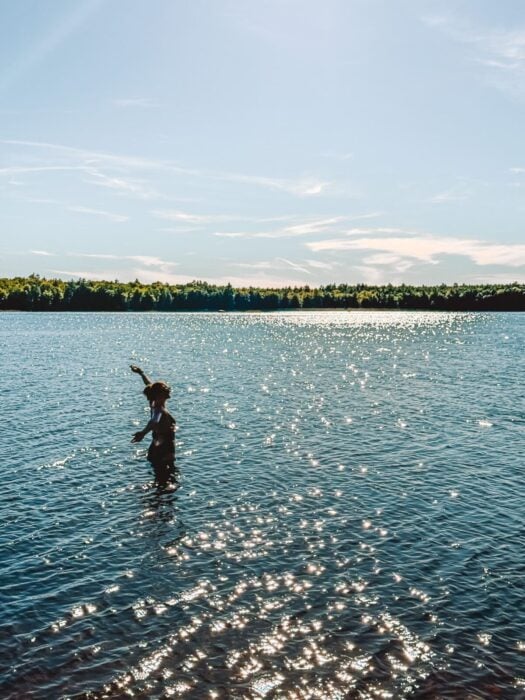
This is, without a doubt, one of the most peaceful places we’ve ever visited. Tall, silent trees line quiet lakes, and you could easily sit by the water for hours, taking in the park’s stillness. There are lakeside trails throughout, and a swim is well worth doing too.
One of the best things to do in Nova Scotia in summer is renting a canoe to explore the waterways. We’d recommend going with a guide, as you’ll learn about the region’s history, hear stories of the Mi’kmaq, and they’ll point out wildlife, including eagles, turtles, deer, and woodpeckers. Some tours take you to the petroglyphs too.


Halls Harbour is a picturesque fishing community in the Bay of Fundy. Fishing boats lie on the ocean floor waiting for the world’s highest tides to fill the harbour with anywhere between 3.5 and 18 metres of water.
You can’t visit Nova Scotia without eating lobster, and Halls Harbour’s working lobster pound is one of the best places to do it.
The restaurant serves some of the freshest seafood in the province, including picking out your very own lobster from the lobster pound; it doesn’t get much fresher than that.


You’ve probably heard of the Bay of Fundy and its record-breaking tides, but Burntcoat Head Park, where the world’s highest tides have actually been recorded, is one of the best places to see in Nova Scotia for it.
One of the most fascinating places in Nova Scotia to visit, Burntcoat Head Park lets you literally walk on the ocean floor. At low tide, the water retreats to reveal striking red sandstone cliffs, flowerpot islands and rock formations. Walk the exposed seabed, peek into tide pools for tiny sea creatures, and take in the sheer scale of the Bay of Fundy.


Twice a day, over 160 billion tonnes of water flow in and out of the Bay of Fundy, with a tidal range reaching up to 16 metres.
Our top tip: the ocean floor is accessible 3 hours on either side of low tide. Check the tide schedule before you visit.
Walking on the ocean floor at Burntcoat Head Park is one of the most unique things to do in Nova Scotia.

One of the most fun things to do in Nova Scotia is tidal bore rafting in the Bay of Fundy.
Depending on your tour, you’ll head out before the tide comes in or ride the rapids first as it rushes back, then return once it’s calm. We set off while the river was calm and shallow; at times we even had to hop out of the boat and drag it over sandbanks because it was that shallow.
The guides were fantastic and so knowledgeable. They pointed out wildlife along the way; we saw tons of bald eagles, and they explained how the channels change daily with the tides – which they need to memorise for the return journey! It was really impressive.
On the way upriver, we stopped for some hilarious mud-sliding down the giant banks of red Fundy mud. Within the hour, this bank would no longer be visible and would be fully underwater.


Once you reach the sandbar, you’ll wait around 20 minutes for the tide to come in. Watching it arrive was unlike anything we’d ever seen. The water races towards you from both directions; it’s not deep, so it isn’t scary, just strange to watch the river transform that fast.
You then jump back in the boat and ride the rapids back to the start. They start gently and grow bigger and wilder as the tide rises.
This was hands down one of the most fun activities in Nova Scotia we did. I started quite nervous, and we naively thought we might stay fairly dry as we had big raincoats on. We couldn’t have been more wrong. Within minutes, we were absolutely soaked, sitting in a boat full of seawater, laughing our heads off. The boats are completely safe and unsinkable, and even if you fell out, you wouldn’t end up any wetter.
Our top tip: even if you’re prone to motion sickness (like me), it’s fine.
After half an hour of riding the rapids, you’ll return to shore for warm showers and hot chocolate. Tidal bore rafting is, without a doubt, one of the best things to do in Nova Scotia in summer.
Fancy a bit of luxury after all that mud and adrenaline? Gravity Luxury Domes sits right on the Shubenacadie River, the same stretch you’ve just rafted, with views over the water from every dome. Some come with a private hot tub; all are adults-only, and staying in a geodesic dome makes for a truly unique night compared to a standard hotel room.
Middle Head is one of the best places to see in Nova Scotia. A narrow peninsula just north of Ingonish Beach, jutting into the ocean between two bays.
The trail winds along the peninsula, with dramatic coastal scenery. You’ll finish on headland cliffs with impressive views over the Atlantic, Cape Smokey and Ingonish Island.

Keep an eye out for seabirds, eagles, seals, and even occasionally whales.
The hike is around 5km and fairly easy, with a bit of up and down but nothing too strenuous.

Salt Mountain is one of the lesser-known but best hikes in Nova Scotia, and it was our favourite.
Located in Whycocomagh Provincial Park, the hike offers spectacular views over Bras d’Or Lake, Whycocomagh Bay, and the surrounding mountains. It’s just water and greenery as far as you can see, and honestly, so peaceful. We could have sat up here all day taking in the view. We also had the trail almost entirely to ourselves.


The hike follows the 4km Salt Mountain and Scout Loop trail. Although not long, the path is rugged and unmaintained, so scrambling over rocks and branches makes it feel longer but also more of an adventure.


Hiking Salt Mountain is one of the very best things to do in Nova Scotia if you’re looking for an off-the-beaten-track experience.
Located on the northeast coast, Arisaig is a great stop between Cape Breton and Halifax or Kejimkujik to break up the journey. This small community is one of the quietest places to visit in Nova Scotia.
Founded in 1758 by Scottish immigrants who named it after their home, Arisaig has beautiful coastal landscapes, maritime history and a small lighthouse.
One of the best things to do in Nova Scotia is to explore Arisaig Provincial Park, with woodland walks, fascinating geology, fossils, a waterfall, and a beach.
Nearby, Steinhart Distillery is a must for a drink with a view over the community (see below for more on that).

If you find yourself in Arisaig, one of the best things to do in Nova Scotia is to have a drink at Steinhart Distillery.
We actually stumbled across it by happy accident while staying next door at Glory Ridge Campground. We saw it as we drove past, so we decided to pop in for a drink.
Founded by German-born Thomas Steinhart, the distillery draws on over 300 years of family experience in craft distilling. Thomas has fond memories of distilling with his grandfather in Germany and has brought that knowledge and skill to Nova Scotia, creating award-winning spirits from local ingredients, including fruit, herbs and spices rather than artificial flavouring.


You can enjoy cocktails, tasting flights, or a simple drink in the sun with sweeping views over Arisaig’s lighthouse, fishing boats and the vast ocean beyond.
We tried a flight of their vodkas, and it was hard to pick a favourite. Each one tasted distinctly of what it had been infused with and was honestly delicious, and I’m not usually a huge fan of vodka.
It’s the perfect spot to unwind after a day of exploring. Try to come for sunset and enjoy the view over the town as the sun goes down.
There’s often live music, events and activities and even on-site accommodation if the campground next door isn’t your thing.
You can’t visit Nova Scotia without spending a little time in its lively capital, Halifax.
Halifax is one of the best places in Nova Scotia to visit, where old-world charm blends with modern energy. Historic stone buildings sit beneath sleek glass skyscrapers, and reminders of its deep maritime roots are everywhere. From the waterfront to the old shipyards and museums, the sea is still very much part of daily life in Halifax.
We only had half a day, but we got a real feel for the city.
Start at the Halifax Citadel, a star-shaped 19th-century fort sitting high above downtown, with sweeping views across the city and towards the harbour. If your timing’s right, catch the Noon Gun, a British Army tradition still fired daily at midday, with reenactors from the 78th Highlanders and Royal Artillery in full period dress around the grounds.
From there, it’s an easy downhill stroll to the waterfront.
Stretching for around 4 kilometres, Halifax Boardwalk is one of the longest urban boardwalks in the world. It’s buzzing with life and full of shops, museums, street food stalls, bars, and beer gardens. It’s not the prettiest waterfront we’ve ever seen (there was also some construction when we were there), but the atmosphere more than makes up for it.

Grab a drink in the sun or sit in one of the colourful chairs at the end of the pier and take in the view: ferries heading to the islands, yachts bobbing in the marina, and a lighthouse just across the water.
For food, head to Black Sheep, a relaxed, modern restaurant with a creative twist on local favourites. I had the lobster ravioli, which was creamy, delicious, and so filling. Andy went for the lobster roll, generously stuffed and very fresh.
One of the best places to visit in Nova Scotia is the Halifax Public Gardens. These Victorian-era gardens are a peaceful escape from downtown, worth a slow walk along winding paths and sitting by the pond with a coffee. We even spotted a couple having their wedding photos taken; apparently it’s a popular spot for that.


The best way to get to know Halifax is on a guided walking tour. This 2.5-hour route takes you from the Old Burial Ground, dating back to 1749, to Citadel Hill and Canada’s oldest Victorian-style gardens, with a local guide sharing lots of history along the way.
Or why not combine Peggy’s Cove with a guided tour of Halifax? This one takes you along the boardwalk to Canada’s oldest lighthouse, with a stop at a seafood restaurant, before heading back to the city for the Titanic’s Grave Site and Citadel Hill.
You can’t talk about the best things to do in Nova Scotia without mentioning lobster; it’s basically a rite of passage. This province is famous for it, and you’ll find it in every form you can think of: tacos, creamy bruschetta, sandwiches, crispy wontons, and the classic buttery rolls, just to name a few.
But to really do it properly, have it the traditional way: freshly boiled or steamed, and ideally with a view of the ocean. Hall’s Harbour is one of the best places in Nova Scotia for the freshest and most authentic lobster experience. Choose your lobster, crack it open and dip it in butter *chef’s kiss*.


Yes. It doesn’t have the mountains of Western Canada, but the coastline, colourful fishing villages, world-record tides and lobster make it one of Canada’s most underrated destinations.
The Cabot Trail and Peggy’s Cove, both for good reason. The Cabot Trail is considered one of the world’s most scenic drives, and Peggy’s Cove Lighthouse is the image most people picture when they think of Nova Scotia.
May to October, when the weather’s warmer and the landscapes are at their best.
Summer is the warmest and ideal for kayaking, swimming in the lakes and ocean or relaxing on the beach. However, it’s also peak season, so expect crowds at the most popular things to do in Nova Scotia and also increased prices.
Autumn is quieter and cooler, and you’ll have the gorgeous fall foliage. Shoulder season also means cheaper accommodation.
We visited in late September, which was perfect. Most hiking trails were empty, campsites were quiet, and the fall colours were starting to pop. Mornings and evenings were chilly, so we couldn’t eat breakfast or dinner outside, but during the day, temperatures rose to about 20°C.
Also, a few days before we arrived, most of the province was under restrictions because of wildfires, which are becoming increasingly common during the summer. None of the inland hiking trails were open, and the coastal trails were severely restricted, so we wouldn’t have been able to do this trip.
Most of the province shuts down from late October to early May; campsites close and activities like tidal bore rafting pause for winter.

Most people fly into Halifax Stanfield International Airport, which offers domestic and international flights.
You can also arrive by ferry from Maine, New Brunswick, Newfoundland and Labrador, and Prince Edward Island.
If you’re coming from Eastern Canada or the Northeast US, driving works well too. The roads are wide and well-maintained, and having a vehicle makes getting around Nova Scotia’s long distances much easier.
Your own vehicle is best. Distances are long, and you’ll want the freedom to stop at viewpoints, lighthouses and villages whenever you like. Some of the best things to see in Nova Scotia you may stumble upon accidentally as you drive.
One of the best things to do in Nova Scotia is to hire a motorhome. This is how we travelled around for our 7 days and loved every second of it. Some of the campsites are in gorgeous locations, next to lakes or surrounded by huge trees. And it’s really convenient; you don’t need to pack and unpack when you move to a new spot every day.


It’s possible; it just takes a bit more planning. Buses run between certain communities; you’ll need to check local schedules and follow timetables.
In this case, we’d highly recommend booking tours. Many include hotel pick up/drop off from various towns, making long travel days much easier as you don’t need to navigate transport. Get Your Guide offers tons of options run by friendly, knowledgeable local guides who will tell you so much about the area you’re visiting. They’re a great way to experience the best things to do in Nova Scotia without driving.
We spent 7 days and could have done with at least 2 more. Another day in Kejimkujik National Park and another day to slow down on the Cabot Trail and enjoy more of the best hiking trails in Nova Scotia around Ingonish.
You’ll get a good feel for the province in 5 days, but you’ll need to decide between heading north from Halifax to Cape Breton or south to Peggy’s Cove, Lunenburg and Kejimkujik. Trying to squeeze both in will feel rushed, and you’ll spend most of your time driving.
If you have 2 weeks, take it. You’ll have time to really enjoy the peaceful pace of the province, enjoy the scenery without rushing, and spend more time in each place. We felt we were in the car a lot and would have enjoyed slowing down a bit more.
There’s no single base that works for the whole trip; distances are too long for that. It also depends on how long you’ve got. If you’ve got 7 days or less, don’t spend a night in Halifax. It’s a lovely city, but at the end of the day, it’s just a city, and Nova Scotia is all about the scenery. You can get a good feel for it in a couple of hours around the waterfront.
Spend 1 night in either Peggy’s Cove or Lunenburg and explore both from there. Kejimkujik National Park 100% deserves a night (2 if you have time), as does the Bay of Fundy. Cape Breton needs at least 2 to justify the drive up that far.
As a UK passport holder, you’ll need an Electronic Travel Authorisation (ETA) to enter Canada. These are $7 and are valid for five years (or when the passport expires, whichever comes first).
Canadian Dollars. At the time of writing, 1 CAD is approximately 0.72 USD, though check the current exchange rate closer to your trip as it regularly changes.
We hope you’ve enjoyed our guide to the best things to do in Nova Scotia, Canada. If you have any questions or want to know more about visiting Nova Scotia, leave us a comment, and we’ll get back to you.
Check out some of our other Canada guides below, and follow us on Instagram to stay up to date with our adventures in real time.